The Frictionless Life: How the New Wave of Autonomous Gadgets is Redefining Personal Agency
For decades, the relationship between humans and technology has been defined by intent and execution. We decide to search for a fact, we pick up a smartphone, and we type. We decide to watch a movie, we find a remote, and we press play. This "active interface" model has been the cornerstone of the digital age. However, a fundamental shift is currently underway. We are transitioning from an era of tools that wait for commands to an era of agents that anticipate needs.
As we survey the latest landscape of consumer electronics, the trend is unmistakable: technology is becoming invisible, proactive, and increasingly autonomous. This isn't just about faster processors or higher-resolution screens; it is about the integration of sensor fusion, edge computing, and multimodal AI into the very fabric of our daily movements.
The Rise of Contextual Wearables
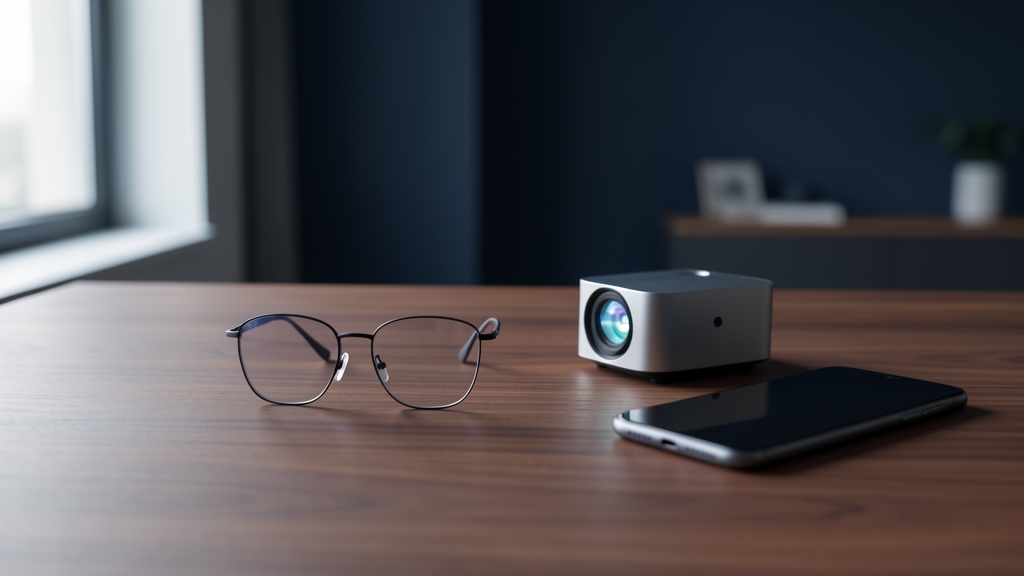
Perhaps the most significant leap is occurring in the realm of wearable intelligence. The long-promised era of smart glasses has finally moved past the "clunky peripheral" stage into something remarkably sophisticated. Modern AI-powered smart glasses are no longer mere heads-up displays for notifications. Instead, they function as a secondary set of cognitive eyes.
Equipped with high-fidelity cameras and integrated neural processing units, these devices leverage computer vision to interpret the user's surroundings in real-time. We are seeing devices that can translate a foreign language menu instantly, identify botanical species in a park, or provide step-by-step visual guidance for complex mechanical repairs. The technical achievement here is not just the hardware, but the latency reduction. By processing much of this data on-device through edge computing, these wearables provide contextual information without the lag that previously broke the illusion of seamless integration.
This category extends to the broader spectrum of wearables—from rings that monitor metabolic shifts with clinical accuracy to haptic feedback devices that assist with navigation—all contributing to a continuous stream of personal data that helps mitigate the "micro-frictions" of daily life.
The Domestic Autonomous Frontier
While wearables manage our external interactions, a second wave of technology is quietly reclaiming our domestic time. The evolution of the robotic lawn mower represents a microcosm of this broader trend. Previous generations were limited by perimeter wires and simple obstacle avoidance. The new standard utilizes LiDAR and sophisticated SLAM (Simultaneous Localization, Mapping) algorithms to navigate complex garden landscapes, distinguishing between a stray toy and a pet with high precision.
This move toward "set-and-forget" autonomy is bleeding into every corner of the home. We are seeing a move away from "smart" appliances that simply require an app, toward "autonomous" appliances that manage themselves. This includes smart kitchen systems that track ingredient freshness and suggest recipes based on nutritional deficits, and advanced climate control systems that utilize thermal imaging to optimize energy consumption in real-time. The goal is the same across the board: the elimination of low-value cognitive labor.
Decoupling Compute from the Workspace
The third pillar of this technological shift is the radical portability of high-performance computing. For a long time, "mobile" meant "compromised." You could have portability, or you could have power. That dichotomy is dissolving.
The emergence of ultra-portable, high-lumen laser projectors has changed the geometry of entertainment and productivity. We are no longer tethered to the living room television or a static office desk. These devices, often small enough to fit in a jacket pocket, can turn any flat surface into a high-definition workspace or a cinematic theater. This is supported by a parallel advancement in mobile silicon, where chips are now capable of handling complex rendering and AI workloads that were previously reserved for desktop workstations.
This portability facilitates a "fluid workspace" philosophy. The ability to transition from a high-intensity professional environment to a relaxed, mobile entertainment setup—all without changing hardware—is fundamentally altering how we perceive the boundaries between work and life.
The Granular Optimization of Life
Finally, we are witnessing a surge in "micro-utility" gadgets. These are highly specialized tools designed to solve specific, often overlooked, problems. We are seeing everything from intelligent sleep-optimization systems that adjust ambient soundscapes and temperature in response to brainwave activity, to portable water purification devices that use UV-C light to ensure safety in seconds.
These gadgets may seem niche, but collectively, they represent a massive movement toward the granular optimization of the human experience. By solving small, persistent problems—the lack of sleep, the difficulty of staying hydrated, the clutter of a workspace—these devices aggregate to create a significant increase in overall daily efficiency.
The Verdict
The current trajectory of consumer tech is clear: we are moving away from "interacting with tech" and toward "living alongside tech." The most successful devices in the current market are not those that demand our attention through notifications and pings, but those that work quietly in the background to remove friction. As these systems become more adept at understanding context and predicting intent, the line between our intentions and our environment will continue to blur, ushering in a truly frictionless era of personal agency.