The trajectory of artificial intelligence has long been defined by a singular, relentless pursuit: scale. For years, the industry mantra has been that more parameters, more data, and more compute lead to more intelligence. However, this exponential growth carries a heavy physical tax. Today, that tax is being called in by the world’s energy infrastructures.
In a recent assessment, Temasek Holdings, the Singapore-based global investment firm, issued a stark warning: the rapid expansion of AI capabilities threatens to overwhelm global power grids. The concern is not merely theoretical; it is a logistical and environmental reality. As data centers swell to accommodate the training of next-generation large language models (LLMs), the demand for consistent, high-capacity electricity is outstripping the pace of grid modernization.
Yet, amidst this looming energy bottleneck, a counter-narrative is emerging. A convergence of algorithmic breakthroughs and specialized hardware design suggests that the relationship between intelligence and energy consumption may not be a linear climb. We may be entering an era of "The Efficiency Paradox," where AI begins to solve its own power problem.
The Infrastructure Bottleneck
The warning from Temasek underscores a fundamental tension in the tech ecosystem. While software developers focus on the cognitive capabilities of their models, the physical reality of the "compute stack" is hitting a wall. Modern data centers are no longer just buildings filled with servers; they are massive, concentrated loads of thermal and electrical energy.
The strain is multi-faceted. First, there is the sheer volume of power required for training. Training a frontier-class model requires thousands of interconnected GPUs running at near-peak capacity for months. Second, there is the inference problem—the energy required to actually run these models for millions of users every second. As AI agents become more autonomous and integrated into daily workflows, the cumulative energy cost of inference could soon eclipse the cost of initial training.
For institutional investors like Temasek, this represents a systemic risk. If the power grid cannot support the next leap in AI, the entire roadmap for the industry stalls. This isn't just a matter of carbon footprints; it is a matter of physical capacity and economic stability.
The Algorithmic Pivot: Doing More with Less
If the problem is scale, the solution may lie in intelligence. For much of the last decade, the goal was to make models "dense"—meaning every part of the neural network is activated for every single query. This is inherently wasteful.
A significant shift is now occurring toward "sparse" architectures. The most prominent example is the rise of Mixture-of-Experts (MoE) models. Unlike dense models, MoE architectures only activate a fraction of their total parameters for any given task. By routing information through specialized sub-networks, these models achieve high-level reasoning capabilities while drastically reducing the number of computations required per token. This allows for the "knowledge" of a massive model with the "energy footprint" of a much smaller one.
Beyond sparsity, researchers are making strides in quantization and distillation:
* Quantization: This technique involves reducing the precision of the numbers used in a model's weights. By moving from 32-bit floating-point numbers to 8-bit or even 4-bit integers, developers can shrink model size and speed up processing with negligible loss in accuracy.
* Knowledge Distillation: This process involves training a "student" model—a smaller, leaner architecture—to mimic the behavior of a "teacher" model. The result is a compact model that retains much of the nuance of its much larger predecessor.
The Hardware Renaissance
Software optimization can only go so far if the underlying silicon is built for general-purpose tasks. The current reliance on high-end GPUs, while transformative, is not perfectly optimized for the specific mathematical patterns of neural networks.
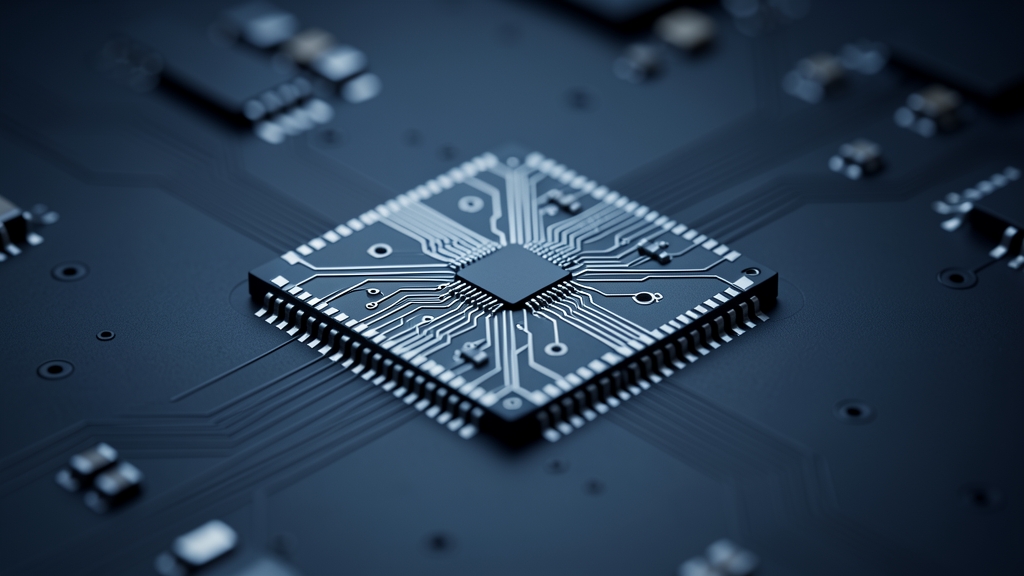
We are witnessing a pivot toward domain-specific architectures. New silicon designed specifically for AI inference—chips that prioritize low latency and low power consumption over raw floating-point throughput—is entering the market. These specialized ASICs (Application-Specific Integrated Circuits) allow data centers to handle more requests per watt, directly addressing the concerns raised by Temasek.
Looking further ahead, the horizon includes neuromorphic computing and optical (photonic) computing. Neuromorphic chips aim to mimic the human brain's efficiency, processing information only when spikes in activity occur. Photonic computing, which uses light instead of electricity to move data, promises to bypass the thermal limitations of traditional electron-based semiconductors entirely.
The Decoupling of Intelligence and Energy
The central question facing the industry is whether we can decouple the growth of intelligence from the growth of energy consumption.
If the current trend of scaling continues without efficiency breakthroughs, the industry will likely face a hard ceiling—a point where the lack of available power simply halts progress. However, if the convergence of MoE architectures, quantization, and specialized silicon holds true, we may see a "J-curve" of efficiency. In this scenario, the intelligence of AI continues to climb vertically, while its energy demand plateaus or even dips as the systems become more refined.
The warnings from Temasek serve as a necessary reality check. The era of "brute force" AI may be reaching its limit, making way for an era defined by architectural elegance. The winners of the next decade will not necessarily be those with the largest clusters, but those with the most efficient ones.