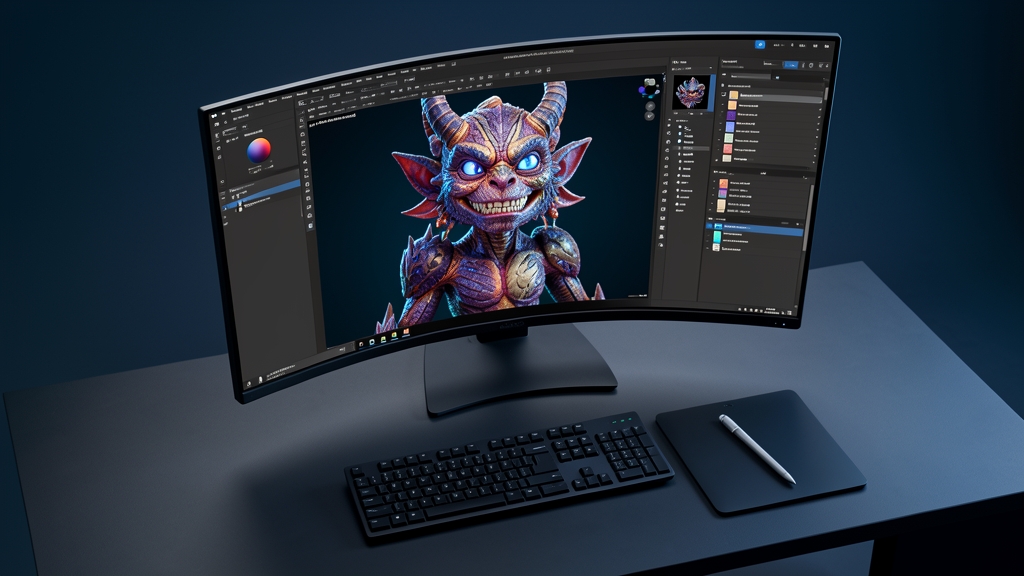
The boundary between Silicon Valley and Hollywood is no longer just blurring; it is being rewritten in real-time. In a move that sends a clear signal to every legacy studio from Burbank to London, Amazon is officially launching its AI Creators Fund. This isn't merely a venture capital play or a standard content acquisition spree. It is a strategic integration of cutting-edge generative technology into the very fabric of Prime Video’s production pipeline.
The announcement comes alongside the acquisition of three high-profile animated projects that serve as the first "proof of concept" for Amazon’s new creative engine. The projects involve a diverse roster of industry veterans and digital natives: acclaimed director Jorge Gutierrez (Maya and the Three), former Nickelodeon executive Albie Hecht, and the digital-first powerhouse BuzzFeed Studios.
The Architect of the New Pipeline
For decades, the animation industry has been defined by its staggering costs and massive labor requirements. Creating high-fidelity, feature-length animation requires hundreds of artists, years of production, and budgets that often exceed hundreds of millions of dollars. Amazon’s strategy appears to be an attempt to shatter this economic model through "AI-native" production.
While the specific technical architecture of Amazon's proprietary suite remains closely guarded, the implication is clear: these three projects are not just "using" AI to assist artists; they are being built upon workflows where generative models handle the heavy lifting of asset creation, in-betweening, and environmental rendering.
The selection of creators suggests a multi-pronged assault on the current market:
* The Prestige Play: By partnering with Jorge Gutierrez, Amazon is signaling that AI-driven workflows can handle high-concept, stylistically complex, and culturally rich storytelling. Gutierrez’s work is known for its distinct visual identity, and using his expertise suggests that Amazon intends to avoid the "generic" aesthetic that currently plagues much generative art.
* The Scale Play: Albie Hecht’s involvement brings a veteran’s understanding of what makes a commercial hit. His role likely focuses on how these new efficiencies can be scaled to create consistent, high-quality episodic content at a fraction of the traditional cost.
* The Agility Play: BuzzFeed Studios represents the fast-moving, social-first side of the spectrum. Their inclusion suggests that Amazon is looking to bridge the gap between viral, short-form digital content and premium, long-form streaming assets.
Beyond the "Uncanny Valley"
The industry’s primary skepticism regarding generative AI has always centered on the "soul" of the work—the fear that automation leads to a loss of intentionality and artistic nuance. However, the Amazon model seems to be pivoting toward "Augmented Creativity."
In this paradigm, the AI does not replace the director; it replaces the tedious, manual tasks that consume the majority of an animator's time. We are looking at a future where a single director can iterate on complex lighting setups, character movements, and background textures in real-time, rather than waiting weeks for a render farm to process a single frame. This "real-time iteration" is the holy grail of digital production.
Market Disruption and the Competitive Landscape
Amazon’s move places immense pressure on legacy players like Disney, DreamWorks, and Netflix. While these studios are certainly exploring AI, they are often encumbered by legacy pipelines and complex labor agreements that make radical technological shifts difficult.
Amazon, conversely, is approaching this as a tech company first. By funding the creators through a specialized fund, they are building a proprietary ecosystem. The creators get the capital and the tools; Amazon gets the intellectual property and the data to further refine its generative models. It is a vertical integration of talent, technology, and distribution that is difficult to match.
The economic implications are profound. If Amazon can produce a show that looks like a $100 million DreamWorks production for $20 million using its AI suite, the traditional math of Hollywood collapses. This could lead to a massive influx of independent creators who, previously barred from high-end animation due to cost, can now compete on a global stage.
The Labor Question
One cannot discuss this breakthrough without addressing the elephant in the room: the workforce. The animation industry is currently navigating a period of intense tension regarding the use of AI. Unions like SAG-AFTRA and various animation guilds are fighting to ensure that AI is used as a tool for human artists, not a replacement for them.
Amazon’s fund is a calculated risk. By selecting established names like Gutierrez and Hecht, they are attempting to build a "pro-talent" narrative. They are positioning the technology as an empowerment tool rather than a displacement tool. However, as these workflows become more efficient, the demand for traditional entry-level roles—the "grunts" of the animation world who handle the manual labor—may diminish, creating a significant structural shift in how talent is trained and employed.
The Verdict
Amazon is not just buying shows; it is buying the future of how those shows are made. The AI Creators Fund marks the moment when generative technology moved from the experimental fringes of the internet into the core of the global entertainment economy. Whether this results in a golden age of creative abundance or a homogenization of digital art remains to be seen, but one thing is certain: the old way of animating is officially on notice.