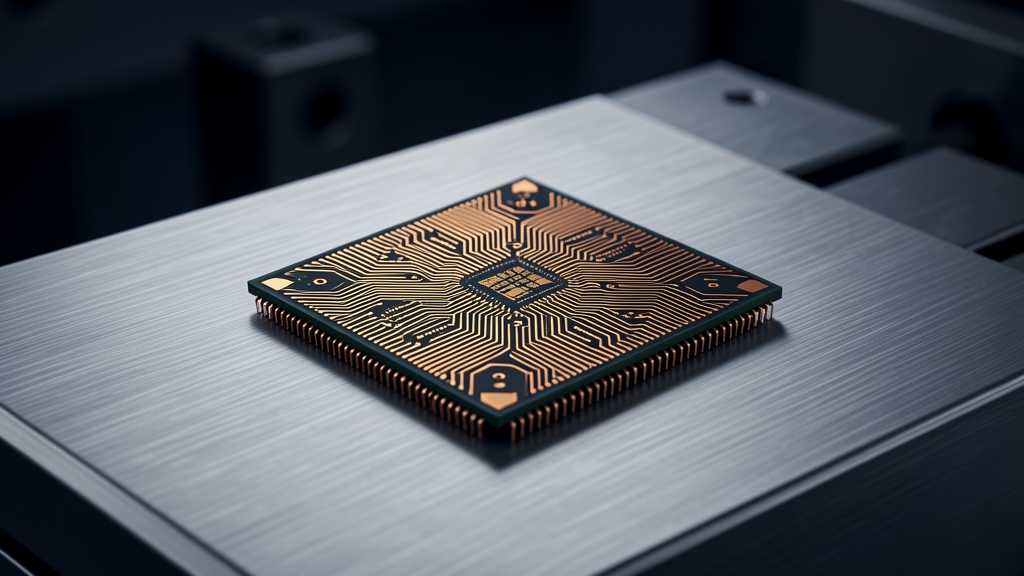
The paradigm of artificial intelligence is undergoing a fundamental shift. For the past several years, the industry has been captivated by generative models living in the cloud—massive LLMs processing data in distant, cooled data centers. But a new frontier is emerging: Physical AI. This is the intelligence required for a machine to perceive, reason, and act within a three-dimensional, unpredictable environment. To power this, the industry needs more than just raw throughput; it needs specialized, highly integrated, and efficient silicon.
AMD is answering this call with the announcement of its X100 chip lineup. By bringing the "Strix Halo" embedded Ryzen AI architecture into the robotics sector, AMD is moving beyond the confines of the desktop and laptop, targeting the very "brains" of autonomous systems.
The Architectural Synergy: Zen 5, RDNA 3.5, and Ryzen AI
The X100 lineup is not a mere rebranding of existing consumer silicon. Instead, it represents a highly optimized convergence of AMD’s most advanced architectures, tailored for the unique constraints of embedded robotics. At the heart of the X100 is the integration of three critical pillars:
* Zen 5 CPU Cores: Providing the high-performance logic necessary for complex pathfinding, sensor fusion, and real-time decision-making. The instruction-per-clock (IPC) improvements in the Zen 5 architecture allow for more sophisticated computational tasks to be performed within the tight timing windows required by autonomous movement.
* RDNA 3.5 GPU Cores: Vision is the primary sense for any robot. The RDNA 3.5 graphics architecture provides the massive parallel processing power needed to handle high-bandwidth data from LiDAR, stereo cameras, and depth sensors. This ensures that the robot can "see" and interpret its surroundings with minimal latency.
* Dedicated Ryzen AI Engines: This is the linchpin. By integrating a dedicated Neural Processing Unit (NPU), the X100 can offload specific AI inference tasks—such as object recognition, gesture control, or voice processing—from the CPU and GPU. This specialization is crucial for maintaining a low power envelope while providing the high-speed inference necessary for real-time interaction.
The Necessity of the APU in Robotics
In traditional high-performance computing, a common approach is to pair a powerful CPU with a discrete GPU (dGPU). However, in the world of robotics, this model breaks down. Robots are constrained by power, heat, and physical space. A discrete GPU introduces significant latency via the PCIe bus and consumes a disproportionate amount of battery life.
The X100 utilizes an Accelerated Processing Unit (APU) approach, where the CPU and GPU reside on the same die, sharing a unified memory architecture. This "Strix Halo" approach drastically reduces the latency involved in moving data between the "eyes" (the GPU processing visual data) and the "brain" (the CPU making decisions). For a robot navigating a crowded warehouse or a human-centric domestic environment, those milliseconds of saved latency are the difference between a fluid interaction and a catastrophic collision.
Competitive Landscape: The Race Against Intel
AMD’s strategic pivot into embedded physical AI puts it on a direct collision course with Intel. Intel has been aggressively pursuing the AI PC and edge computing markets with its upcoming Panther Lake architecture. Panther Lake is expected to lean heavily into advanced node technology and integrated NPU capabilities to capture the same high-growth sectors.
The battle between AMD’s X100 and Intel’s Panther Lake will likely be fought on three fronts: energy efficiency, memory bandwidth, and software ecosystem support. For AMD to win, it must ensure that developers can easily port their existing AI workloads—often built on frameworks like PyTorch or TensorFlow—to the Ryzen AI architecture via optimized libraries.
Market Impact: Beyond the Hobbyist
While much of the recent discussion around robotics has focused on hobbyist platforms and research prototypes, the X100 lineup signals AMD's intent to capture the industrial and commercial markets. We are looking at the potential for:
1. Logistics and Warehousing: Fully autonomous mobile robots (AMRs) that can navigate complex, changing environments without tethering to a central server.
2. Domestic Assistance: Small-scale, highly intelligent home robots capable of sophisticated interaction and environmental awareness.
3. Industrial Automation: Collaborative robots (cobots) that work alongside humans, requiring high-speed sensory processing to ensure safety and precision.
The X100 represents more than just a new chip; it is an acknowledgment that the next great leap in AI will not happen in a chat window, but in the physical world. As AMD pushes the boundaries of what an integrated APU can achieve, the line between digital intelligence and physical action continues to blur.