The landscape of high-performance computing (HPC) is about to undergo a seismic shift. For years, the industry has grappled with the "memory wall"—the widening performance gap between incredibly fast CPU cores and the relatively sluggish latency of system memory. Today, AMD has signaled that it intends to tear that wall down.
The technical details surrounding the upcoming Venice-X processor, a cornerstone of the Zen 6 architecture, suggest a move toward extreme specialization. With a massive 96-core configuration and a boost clock reaching 5.15 GHz, the Venice-X is not merely an incremental update; it is a brute-force reimagining of what a general-purpose processor can achieve when paired with massive, on-die memory.
The Gigabyte Cache Revolution
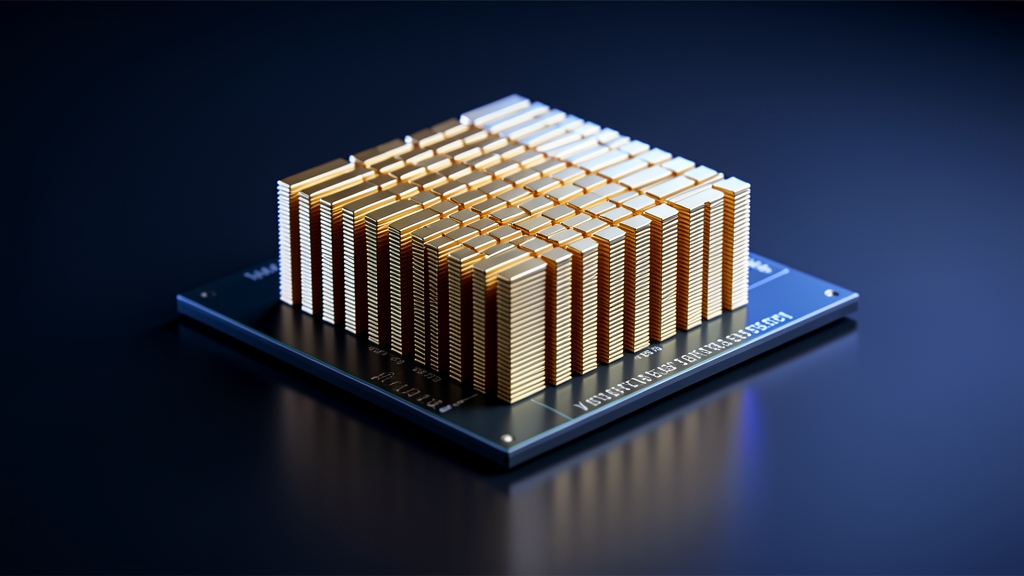
The most striking figure in the Venice-X specification sheet is the 1,152 MB of 3D V-Cache. To put this in perspective, previous iterations of AMD’s X3D technology focused on bringing significant, but manageable, amounts of L3 cache to consumer and enterprise chips. Jumping to over a gigabyte of stacked cache represents an exponential leap in architectural philosophy.
By utilizing advanced 3D die-stacking techniques, AMD is essentially placing a massive reservoir of data directly on top of the compute complex. For workloads that are traditionally "cache-hungry"—such as large-scale fluid dynamics simulations, genomic sequencing, and complex financial modeling—this change is transformative. Instead of the CPU constantly waiting for data to travel from much slower DDR5 modules, the Venice-X allows entire datasets to reside within the high-speed cache layers. This minimizes latency and keeps the 96 cores fed with instructions at a pace that traditional architectures simply cannot match.
Zen 6: The Architectural Pillars
While the cache is the headline, the foundation of Venice-X is the Zen 6 architecture. While full architectural whitepapers remain under wraps, the "pillars of Venice" suggest a refined approach to chiplet interconnectivity and power efficiency.
Achieving a 5.15 GHz boost clock across a 96-core die is a monumental engineering feat, particularly when dealing with the thermal complexities of 3D V-Cache. Stacking cache layers creates a literal thermal blanket over the compute dies, making heat dissipation the primary antagonist of high clock speeds. The ability to maintain a 5.15 GHz boost suggests that AMD has made significant breakthroughs in either the thermal conductivity of their packaging materials or the granularity of their power management systems.
We expect the Zen 6 architecture to introduce significant improvements in Instructions Per Clock (IPC), likely driven by a wider execution engine and improved branch prediction. When combined with the sheer throughput of 96 cores, the Venice-X is positioned to be a monster of parallel processing.
Redefining the Competitive Landscape
The arrival of Venice-X sends a clear message to both Intel and NVIDIA. While NVIDIA currently dominates the specialized AI accelerator market, AMD is carving out a unique territory: the high-performance, general-purpose CPU that can handle AI workloads with unprecedented efficiency.
In the enterprise data center, the competition has often been a choice between the versatility of a CPU and the raw power of a GPU. However, as AI inference and massive datasets become more integrated into standard enterprise workflows, the line is blurring. By integrating a massive cache directly into the CPU, AMD is attempting to capture the "middle ground" of the compute spectrum—offering a chip that can handle traditional heavy-duty server tasks while simultaneously providing the low-latency memory access required for modern AI and machine learning workloads.
The Road to 2027
As we look toward the scheduled launch in 2027, the industry is watching closely to see how the thermal and power envelopes of the Venice-X will translate to real-world data center environments. The sheer scale of 1,152 MB of cache is an ambitious bet on the continued evolution of 3D stacking technology.
If AMD successfully manages the thermal overhead and delivers on the promised IPC gains of Zen 6, Venice-X won't just be a new processor; it will be a paradigm shift. It marks the moment where the CPU stops being a mere orchestrator of data and starts becoming the primary repository for it.
Key Technical Specifications at a Glance:
* Architecture: Zen 6
* Core Count: 96 Cores
* Max Boost Clock: 5.15 GHz
* Total 3D V-Cache: 1,152 MB
* Primary Target: High-Performance Computing (HPC) and Data Centers