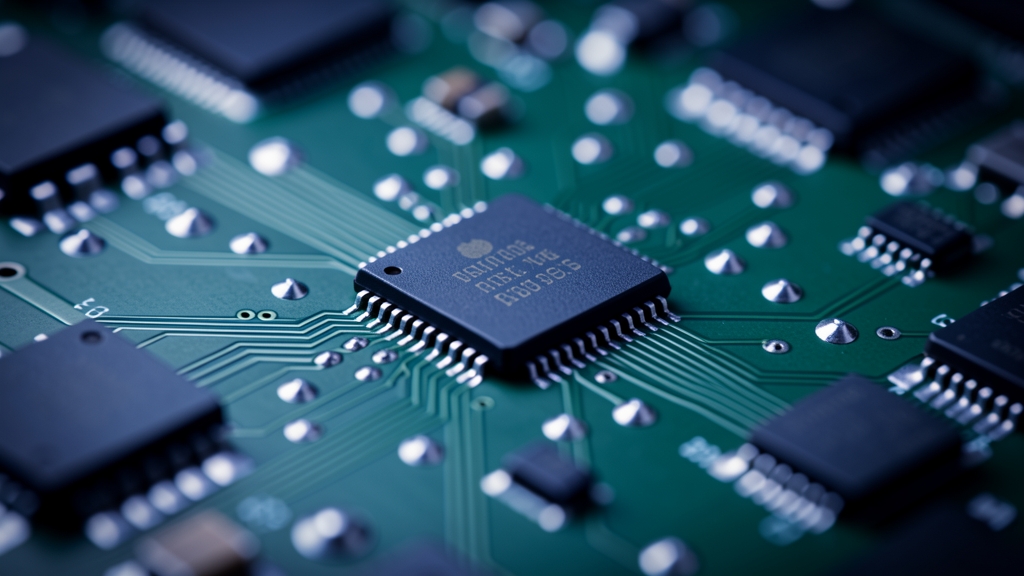
The landscape of artificial intelligence is undergoing a fundamental architectural shift. While the previous era of AI was defined by the massive, centralized power of cloud-based Large Language Models, the current frontier is moving toward the "edge"—the sensors, microcontrollers, and embedded devices that inhabit our physical world. In a significant validation of this movement, Edge Impulse has been named the winner of the "MLOps Innovation Award" in the Artificial Intelligence Breakthrough Awards Program.
This recognition is more than a trophy for a single company; it is a signal to the market that the industry has reached a critical inflection point. The challenge is no longer just about building a model that works in a controlled laboratory setting; the challenge is building a system that can be deployed, managed, and scaled across millions of diverse, resource-constrained devices in the wild.
The Bottleneck of Decentralized Intelligence
For years, the dream of "intelligent things" has been hampered by a massive operational bottleneck. In traditional machine learning operations (MLOps), engineers manage data pipelines, model versioning, and deployment cycles within the relatively forgiving environment of the cloud. They have access to near-infinite compute, massive memory, and high-speed connectivity.
The edge is a different beast entirely. When you move AI to a microcontroller or a low-power sensor, you are operating under extreme constraints. You have kilobytes of RAM, limited processing power, and often, intermittent or non-existent connectivity. Traditionally, moving a model from a researcher's laptop to a production-grade industrial sensor was a manual, error-prone process involving complex "hand-offs" between data scientists and embedded engineers.
This fragmentation is what the industry refers to as the "deployment gap." It is the space where brilliant machine learning prototypes go to die because they cannot be efficiently optimized for the hardware they are meant to inhabit.
Bridging the Gap: The MLOps Approach
The MLOps Innovation Award recognizes that Edge Impulse has addressed this gap by creating a cohesive, end-to-end workflow that treats edge AI as a continuous lifecycle rather than a one-time deployment.
The platform’s architecture focuses on several critical pillars that differentiate it from traditional cloud-based MLOps tools:
* Integrated Data Acquisition: Rather than relying on static datasets, the platform enables developers to collect real-world data directly from the target hardware. This ensures that the data used for training is representative of the actual environment—including the noise, vibration, and signal characteristics of the specific sensor being used.
* Hardware-Aware Optimization: One of the most significant technical hurdles in edge AI is model size. Edge Impulse utilizes sophisticated optimization techniques, such as quantization and pruning, to shrink models without sacrificing significant accuracy. This allows complex neural networks to run on bare-metal hardware that would otherwise be incapable of supporting them.
* Automated Deployment Pipelines: By streamlining the transition from training to deployment, the platform minimizes the friction between software and hardware teams. This allows for faster iteration cycles, enabling companies to update their "smart" devices with new intelligence via over-the-air (OTA) updates.
* Monitoring and Model Drift: Once a model is in the field, its performance can degrade due to environmental changes or sensor aging. A robust MLOps framework provides the visibility necessary to detect this "model drift" and trigger retraining cycles, ensuring long-term reliability.
Market Implications: From Wearables to Industrial IoT
The implications of sophisticated edge MLOps extend far beyond consumer gadgets. We are seeing a convergence of AI and the physical world across multiple massive verticals.
In Industrial IoT (IIoT), predictive maintenance is the holy grail. Instead of sending massive amounts of raw vibration data to the cloud—which is costly and slow—an intelligent sensor can process the data locally and only alert the operator when it detects a specific pattern of impending failure. This reduces latency and saves immense amounts of bandwidth.
In the Automotive sector, the move toward software-defined vehicles requires local intelligence for everything from driver monitoring systems to advanced driver-assistance systems (ADAS). These functions cannot rely on the cloud; they must be deterministic, fast, and highly reliable.
In Consumer Electronics, we see the rise of "privacy-first" AI. By processing voice commands or gesture recognition locally on a wearable device, manufacturers can offer advanced features without ever sending sensitive user data to a centralized server.
The Maturation of the AI Ecosystem
The recognition of Edge Impulse by the Artificial Intelligence Breakthrough Awards highlights a broader trend: the maturation of the AI ecosystem. We are moving out of the "wow factor" phase—where simply making a machine recognize a cat is considered a breakthrough—and into the "reliability and scale" phase.
The winners of this era will not necessarily be the ones with the largest models, but the ones with the most efficient deployment pipelines. As the industry looks toward a future of ubiquitous, distributed intelligence, the ability to manage the machine learning lifecycle at the edge is becoming the most valuable commodity in the tech stack.
The award serves as a definitive statement: the future of AI isn't just in the clouds; it's in the very fabric of the devices around us.