The Great Pivot: Inside Tesla’s High-Stakes AI Spending Spree
Elon Musk is no longer just talking about the future of autonomy; he is financing it with aggressive, unprecedented intensity.
In a directive that signals a fundamental shift in the company's DNA, Musk asserts that Tesla should be investing in artificial intelligence "as fast as we can." This is not mere rhetoric. The financial data backing this statement is staggering: Tesla’s capital expenditure has soared 142% year-over-year, reaching a massive $5.8 billion in the second quarter.
This surge in spending marks a definitive departure from the traditional growth cycles of an automotive manufacturer. While most carmakers focus their capital on factory expansions, battery chemistry, and supply chain resilience, Tesla is diverting its massive cash reserves into the most expensive commodity of the modern era: compute power.
The Anatomy of a $5.8 Billion Bet
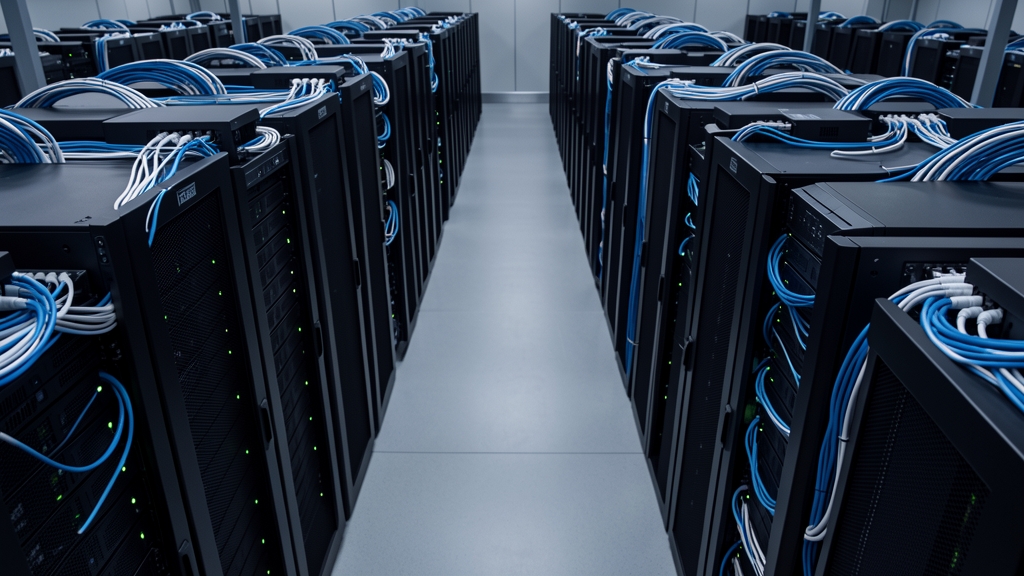
The 142% jump in capital expenditure represents more than just a budget increase; it represents a metamorphosis. To understand where this money is going, one must look past the assembly lines of Fremont and Berlin and toward the high-density server racks and neural network training clusters that are becoming the core of Tesla’s operations.
The spending spree is focused on three critical, interconnected pillars:
* The Compute Infrastructure: The backbone of any modern AI powerhouse is the hardware required to train large-scale models. This includes the procurement of thousands of high-end GPUs and the continued development of Dojo, Tesla's proprietary supercomputer designed specifically for video training and neural network optimization.
* Full Self-Driving (FSD) Evolution: The transition from heuristic-based driving to end-to-end neural networks requires an astronomical amount of data processing. Every mile driven by a Tesla vehicle on the road serves as a training data point, but processing that data requires a massive, centralized intelligence engine.
* The Optimus Program: Tesla’s humanoid robot, Optimus, represents the ultimate application of Tesla's AI research. Developing a machine capable of navigating the physical world with human-like dexterity requires a level of computer vision and real-time decision-making that is currently at the bleeding edge of science.
Moving from Hardware to Intelligence
For years, the market has valued Tesla through the lens of an automotive company, focusing on vehicle delivery numbers and gross margins per unit. However, the current trajectory suggests that Musk is attempting to decouple Tesla’s valuation from the cyclical and highly competitive electric vehicle market.
By prioritizing AI, Tesla is attempting to build a "moat" that traditional automakers—even those with massive R&D budgets—will find nearly impossible to cross. The barrier to entry in the EV market is capital and manufacturing scale; the barrier to entry in the AI-robotics market is data and compute. Tesla is betting that it can win both.
The technical implication is profound. Tesla is moving from a hardware-centric business model (selling a car once) to a software-and-intelligence-centric model (scaling intelligence across millions of endpoints). In this new paradigm, the vehicle is essentially a mobile, high-performance edge computing device.
The Risk of Margin Compression
The aggressive spending spree is not without its critics. For investors who prioritize predictable cash flows and stable margins, the 142% increase in CapEx is a source of anxiety.
Building out massive data centers and procuring cutting-edge silicon is incredibly capital-intensive. In the short term, this spending exerts significant pressure on Tesla's free cash flow. There is a palpable tension between the need to maintain a healthy balance sheet for the core automotive business and the hunger of the AI division, which requires constant, heavy infusions of capital to stay competitive with tech giants like Nvidia, Meta, and Google.
If the promised breakthroughs in FSD or the commercialization of Optimus face delays, the "AI-first" strategy could be viewed in hindsight as an expensive distraction that eroded the company's automotive profitability.
The Global Compute Race
Tesla’s move also places it directly in the crosshairs of the global geopolitical struggle for AI supremacy. The race for silicon, energy, and data centers is the new arms race. By scaling its spending "as fast as we can," Tesla is attempting to secure its place in the supply chain of the future.
The company’s ability to secure high-end chips and, more importantly, the massive amounts of energy required to power its supercomputers, will be the ultimate test of its operational excellence. Tesla is no longer just competing with Ford or Volkswagen; it is competing with every major player in the Silicon Valley ecosystem.
As the second quarter results show, the transition is well underway. Tesla is no longer merely a company that makes cars; it is a company that is building the intelligence that will eventually move them.