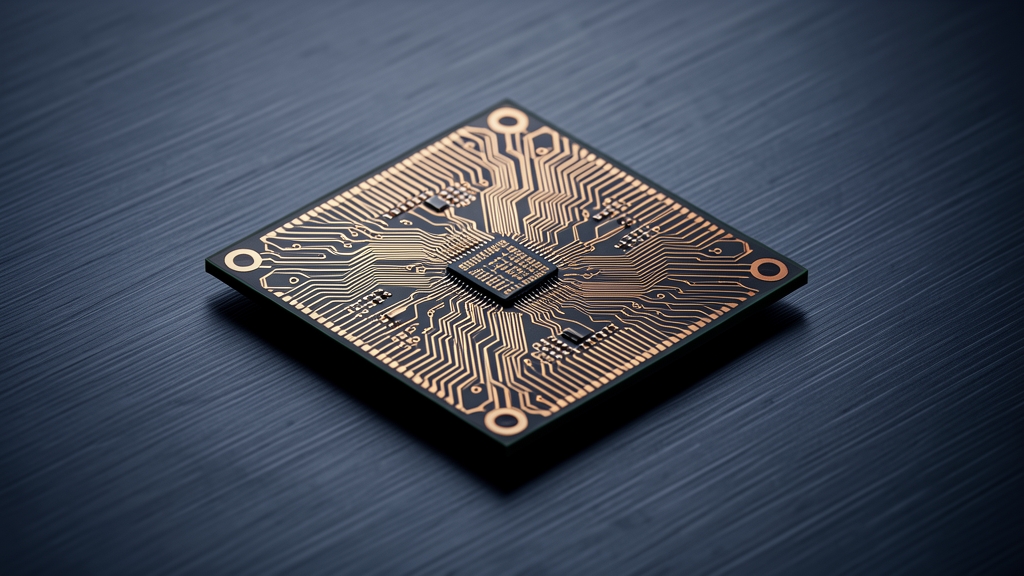
The era of big tech being mere customers of the semiconductor industry is rapidly coming to a close. In a move that signals a massive shift in the power dynamics of the artificial intelligence race, Meta Platforms is preparing to step into the role of a chip architect and manufacturer.
According to internal company memos obtained via Reuters, Meta plans to initiate production of its own custom-designed artificial intelligence chips as early as September. This isn't just a peripheral hardware update; it is a foundational restructuring of Meta’s entire technical infrastructure. The goal is ambitious: to effectively double the company's total computing capacity and reduce its reliance on the high-cost, high-demand GPUs currently dominating the market.
The End of the "GPU Tax"
For the past several years, the path to AI supremacy has been paved by NVIDIA. The tech giant’s H100 and subsequent Blackwell architectures have become the gold standard, acting as the literal engine for every major Large Language Model (LLM) in existence. However, this dominance comes with a heavy "GPU tax"—a combination of astronomical procurement costs and the supply chain bottlenecks that leave even the wealthiest companies waiting months for hardware.
Meta’s decision to move toward custom silicon is a classic play for vertical integration, mirroring the strategies employed by Apple in the mobile space and Tesla in the automotive sector. By designing chips specifically for its own workloads, Meta can bypass the inefficiencies of general-purpose hardware. While an NVIDIA chip is designed to handle a vast array of scientific and industrial computations, Meta’s silicon will be surgically optimized for the specific mathematical operations required to train and run its Llama series of models.
Architecting for Llama: The Technical Edge
The technical implications of this move are profound. Current AI workloads are often bottlenecked not just by raw compute power, but by memory bandwidth and energy efficiency. In a massive data center, the cost of electricity and the ability to move data between memory and the processor are often more critical than the speed of the processor itself.
By controlling the silicon, Meta’s engineers can design a specialized architecture that:
* Optimizes Interconnects: Reducing the latency between thousands of chips working in parallel.
* Refines Memory Management: Tailoring the chip to the specific attention mechanisms used in transformer-based architectures.
* Maximizes Performance-per-Watt: Directly addressing the massive power consumption issues currently facing hyperscale data centers.
This level of hardware-software co-design is where the next generation of AI breakthroughs will likely happen. When the software (Llama) and the hardware (Meta Silicon) are designed in the same room, the resulting synergy can produce performance gains that general-purpose chips simply cannot match.
Doubling the Compute Frontier
The memo’s most striking detail is the target to double computing capacity. To put this in perspective, Meta has already been spending tens of billions of dollars on infrastructure. Doubling that capacity implies a scaling effort of unprecedented magnitude.
This expansion is not merely about running more chatbots. It is about the transition from narrow AI applications to more agentic, reasoning-capable systems that require exponentially more compute to function. As Meta pushes deeper into the integration of AI within its social platforms and its vision for augmented reality, the demand for real-time, low-latency inference becomes a mission-critical requirement. Custom chips provide the only viable path to meeting that demand at scale without bankrupting the company through third-party hardware purchases.
Market Ripples: Who Wins and Who Loses?
The announcement sends a clear message to the semiconductor ecosystem. While Meta will likely remain a massive customer for NVIDIA in the short term, the long-term trajectory is one of independence.
1. NVIDIA and the Giants: While NVIDIA’s moat is massive, the entry of hyperscalers (Meta, Google, Amazon, Microsoft) into custom silicon design creates a ceiling for how much market share the pure-play chipmakers can hold.
2. The Design Partners: Companies like Broadcom and Marvell, which often assist big tech firms in designing custom silicon, stand to benefit immensely from Meta’s move.
3. The Software Stack: One of the biggest hurdles for Meta will be the software. NVIDIA’s CUDA platform is the industry's "operating system" for AI. Meta must ensure that its custom silicon is supported by a robust software stack that allows its developers to deploy models seamlessly.
The Execution Risk
Despite the strategic brilliance of the move, the path to silicon sovereignty is fraught with risk. Chip manufacturing is one of the most complex industrial processes on Earth. Yield rates—the percentage of functional chips produced on a wafer—can make or break a project's economics. If Meta’s September production run faces delays or high defect rates, it could stall its entire AI roadmap.
Furthermore, the "arms race" is moving at a blistering pace. By the time Meta’s custom chips are fully deployed and optimized, the underlying AI architectures might have shifted, potentially rendering the new hardware less effective.
Nevertheless, Meta is clearly betting that the future of the internet will be built on its own terms, powered by its own silicon. The September production window represents more than a manufacturing milestone; it is a declaration of independence in the most important technological struggle of the decade.