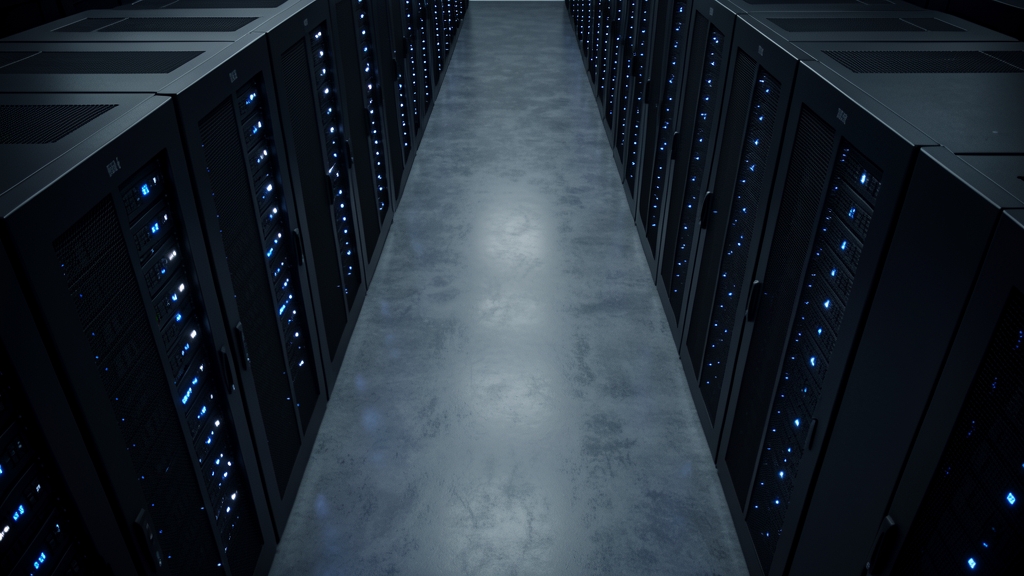
The era of unlimited AI expansion is hitting a hard, physical reality.
In a move that underscores the intensifying scarcity of the world's most valuable digital commodity—compute—Google has placed significant limits on Meta Platforms Inc.’s ability to utilize its Gemini artificial intelligence models. According to a report from the Financial Times, the decision stems from a fundamental bottleneck: Google simply cannot provide the massive amount of computing capacity that Meta is demanding to fuel its aggressive integration of AI across its social ecosystem.
This development marks a pivot in the Silicon Valley landscape. For the past several years, the narrative has focused on the "intelligence race"—who can build the largest, most capable model. Today, the narrative is shifting toward the "infrastructure race"—who can actually power those models at scale.
The Scaling Paradox
The tension between Google and Meta highlights a growing paradox in the industry. As Large Language Models (LLMs) continue to grow in complexity, the demand for inference—the process of running a trained model to generate an answer—is exploding.
Meta’s ambitions are nothing short of planetary. With billions of users across WhatsApp, Instagram, and Facebook, every AI-driven interaction, from automated replies to sophisticated content generation, requires a slice of a data center's processing power. When Meta seeks to leverage Gemini to bolster its service offerings, it isn't just asking for software; it is asking for an astronomical amount of specialized hardware cycles.
Google, despite its massive infrastructure, is finding that even its vast reserves are not infinite. The decision to cap Meta’s access suggests that the demand for high-end AI processing is outstripping the physical ability to deploy and power the necessary chips and data centers.
The Silicon Divide
At the heart of this friction lies the struggle for hardware dominance. While the industry has long been reliant on third-party silicon, the major players are increasingly looking inward.
Google has long enjoyed a strategic advantage with its Tensor Processing Units (TPUs), custom-designed chips optimized specifically for machine learning workloads. This vertical integration allows Google to squeeze more efficiency out of its data centers than many of its competitors. However, even with TPUs, the sheer volume of requests required to satisfy a company of Meta's scale creates a zero-sum game. For Google to satisfy Meta’s demand, it might have to divert resources away from its own core products, such as Search or Workspace.
Meta, for its part, is not sitting idly by. The company has been aggressively developing its own custom silicon, such as the Meta Training and Inference Accelerator (MTIA), to reduce its reliance on external providers. This "cap" by Google may serve as a massive accelerant for Meta’s push toward total hardware independence. If the giants of the industry cannot rely on each other for infrastructure, they will be forced to build their own digital fortresses.
The Impact on the AI Ecosystem
The implications of this bottleneck extend far beyond the boardroom of two tech titans. We are witnessing the emergence of a "Compute Divide."
* The Infrastructure Moat: Companies with the deepest pockets and the most advanced custom silicon are creating a moat that is no longer just about data or talent, but about electricity and physical real estate.
* The Rise of Model-as-a-Service (MaaS) Constraints: As more enterprises look to use models like Gemini via API, providers may have to implement "priority tiers" similar to what we see in cloud computing, where only the highest payers get the lowest latency.
* Optimization Over Size: This scarcity is likely to trigger a new wave of research focused on "small language models" (SLMs) and efficiency. If you can't get more compute, you must make more out of the compute you have.
A Shift in Strategy
For Google, this is a delicate balancing act. While providing Gemini to Meta offers a massive revenue stream and cements Gemini as an industry standard, the opportunity cost is high. Every cycle spent processing a Meta request is a cycle not spent refining Google’s own consumer-facing AI products.
For Meta, the cap is a strategic setback but a tactical signal. It reinforces the necessity of their "Llama" ecosystem. If Google limits the supply of Gemini, Meta has every incentive to push its own open-weights models even harder, ensuring they are never again beholden to a competitor's hardware limitations.
The "Compute Ceiling" is a sobering reminder that the most advanced software in human history is still ultimately tethered to the physical world: to silicon, to cooling systems, and to the power grid. The AI arms race has moved from the cloud into the trenches of the data center.