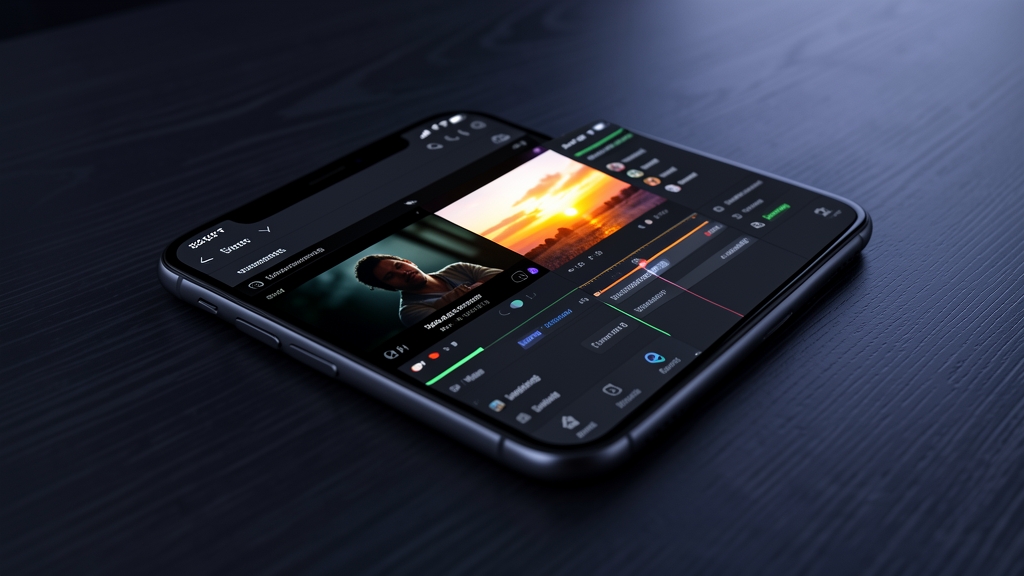
The Era of the Generative Motion: Google Photos Unveils ‘Video Remix’
For years, the frontier of mobile photography editing has been defined by the still image. We have watched as Google and its competitors mastered the art of the "Magic Eraser," removing unwanted tourists from vacation shots and perfecting the digital glow of a portrait. But video has remained a much more difficult beast to tame. While users can trim clips, apply color filters, or stabilize shaky footage, the fundamental essence of a video—its lighting, its depth, and its environment—has remained largely immutable.
That paradigm is shifting. Google is now introducing "Video Remix," a sophisticated suite of generative AI tools integrated directly into Google Photos. This move signals a pivot from simple video manipulation to true generative video editing, bringing capabilities that were once the exclusive domain of high-end desktop suites like Adobe Premiere Pro or DaVinci Resolve directly to the consumer's pocket.
The Technical Core: Beyond Simple Filters
Unlike the traditional filters that merely overlay a color grade onto an existing frame, Video Remix utilizes deep generative models to understand the semantic content of a video clip. It doesn't just see pixels; it understands objects, light sources, and spatial depth.
The rollout highlights three primary pillars of functionality:
* Cinematic Relighting: This is perhaps the most impressive technical achievement within the suite. Instead of simply increasing the brightness of a dark clip—which often results in "noisy," grainy footage—Video Remix performs a sophisticated re-calculation of light. By generating a 3D depth map of the scene, the AI can simulate new light sources. If a clip was filmed in a dim room, the tool can introduce a virtual "key light" that casts realistic shadows and highlights across the subject, maintaining the volumetric integrity of the scene.
* Dynamic Background Swapping: Background removal has long been a staple of mobile editing, but it has historically been plagued by "jitter"—the messy, flickering edges around a subject as the AI struggles to distinguish hair or clothing from the background. Video Remix leverages advanced temporal consistency algorithms. By analyzing multiple frames simultaneously, the tool ensures that the mask remains stable over time, allowing users to swap a cluttered living room for a serene mountain range without the telltale signs of digital masking.
* Artistic Style Transfer: Moving beyond the "Sepia" filters of old, this feature applies complex neural style transfer to entire video sequences. This allows a standard smartphone clip to be reimagined through various aesthetic lenses—ranging from oil painting textures to stylized animation—while ensuring that the motion of the subjects remains fluid and coherent.
Solving the Temporal Consistency Problem
The primary hurdle in generative video has always been "temporal consistency." In a single photo, an AI can hallucinate a new background easily. In a video, that background must look identical across 30 to 60 frames per second. If the AI makes even a slight error in frame 5, the viewer perceives a jarring visual glitch.
Google’s approach appears to lean heavily on specialized hardware acceleration. By utilizing the Tensor Processing Units (TPUs) found in modern mobile chipsets, Video Remix can perform the heavy lifting of frame-to-frame reconciliation locally or via optimized cloud inference. This ensures that the "Remix" feels like a cohesive piece of film rather than a series of disconnected, AI-generated stills.
Market Impact and the Democratization of Content
The implications for the creator economy are significant. We are witnessing the democratization of post-production. For the casual user, it means a mundane video of a birthday party can be transformed into a cinematic memory. For the social media influencer, it provides a low-friction way to produce high-production-value content without needing a lighting rig or a green screen.
However, this move also places Google in direct competition with specialized mobile editing apps like CapCut. By integrating these features into a platform that already houses the world's largest repository of personal media, Google is positioning itself as the indispensable ecosystem for both storage and creation.
The Ethical Horizon: The Authenticity Dilemma
As with any leap in generative technology, Video Remix brings significant ethical questions to the forefront. When a user can seamlessly change the lighting of a scene or replace the background of a video, the line between a "memory" and a "manufactured moment" begins to blur.
The tech industry is currently grappling with how to label AI-modified content. It is expected that Google will lean heavily into metadata standards and digital watermarking—likely utilizing technologies like SynthID—to ensure that while a video can be "remixed," its status as an AI-enhanced file remains transparent to both search engines and users.
As Video Remix rolls out, the question for users will not just be "What can I create?" but "How much of what I see is real?"