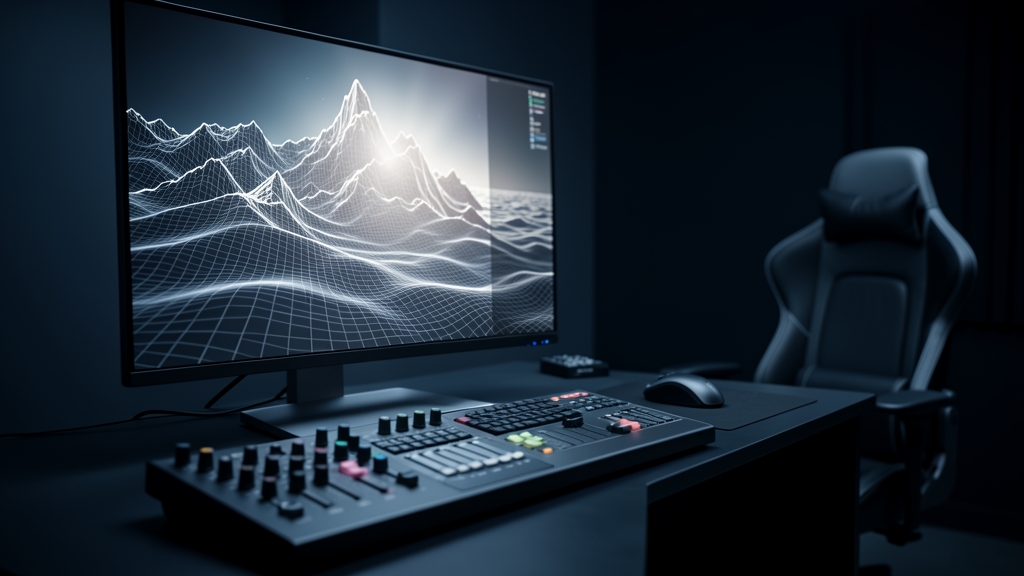
The polished, cinematic footage emerging from Google’s Veo model doesn't just represent a milestone in generative artificial intelligence; it represents a tectonic shift in the economics of digital storytelling. While tech enthusiasts celebrate the ability to summon photorealistic landscapes and complex motion from simple text prompts, the professional Visual Effects (VFX) community is reacting with a mixture of profound anxiety and organized resistance.
The controversy centers on the speed and quality at which Veo operates. Unlike previous iterations of generative video that were plagued by "hallucinations," temporal instability, and a dreamlike, warping aesthetic, Veo demonstrates a sophisticated grasp of physics, lighting, and cinematic consistency. For the first time, the gap between "AI-generated clip" and "studio-grade footage" is narrowing to a point that demands immediate industry attention.
The Anatomy of Disruption
To understand the backlash, one must look at the traditional VFX pipeline. A standard sequence involves a grueling hierarchy of tasks: pre-visualization, asset creation, modeling, texturing, rigging, animation, lighting, and finally, compositing. Historically, these roles have been the bedrock of the industry, providing a career ladder for thousands of artists.
Veo and its contemporaries target the "middle" of this pipeline. By generating entire shots from semantic descriptions, the tool can theoretically bypass the need for manual rotoscoping, complex lighting setups, and even high-end character rigging for non-hero assets.
"We aren't just talking about replacing a single artist," says one prominent compositing specialist in a recent industry forum. "We are talking about the collapse of the entire labor structure that supports mid-to-junior level roles. If a studio can generate a background plate or a crowd simulation in thirty seconds for the cost of a compute cycle, the need for a department of twenty artists evaporates."
The Efficiency vs. Artistry Debate
The tension within the industry is bifurcated into two distinct camps: the optimists and the displaced.
The Optimist Perspective:
Proponents argue that Veo is a "force multiplier." They suggest that by automating the "grunt work"—the tedious, repetitive tasks like masking or texture tiling—artists will be liberated to focus on high-level creative direction. In this view, the VFX artist evolves from a technician into an "AI Orchestrator," managing complex generative workflows to achieve visions that were previously too expensive or time-consuming to realize.
The Displaced Perspective:
The backlash, however, focuses on the reality of studio economics. In an industry characterized by thin margins and intense competition, studios are incentivized to prioritize cost reduction above all else. The fear is that "creative direction" will become the only surviving role, while the technical expertise required to actually build worlds will vanish. This creates a secondary, more long-term problem: the erosion of the talent pipeline. If entry-level roles are automated away, how does the next generation of master artists gain the foundational skills necessary to oversee the machines?
Market Impact and Labor Volatility
The economic implications are already being felt in contract negotiations and project bidding. We are seeing a trend where "AI-augmented workflows" are becoming a standard clause in production agreements. This creates a precarious environment for freelancers, who must now compete not just against each other, but against the diminishing cost of automated production.
Furthermore, the legal landscape remains a battlefield. The datasets used to train models like Veo—often scraped from vast swaths of the internet—continue to be a point of contention regarding copyright and the intellectual property rights of the original creators. VFX houses are caught in the middle, weighing the undeniable efficiency of these tools against the potential legal and ethical liabilities of using them.
The Path Forward
As we move deeper into this era of generative media, the VFX industry finds itself at a critical inflection point. The technology is no longer a novelty; it is an industrial reality.
The coming months will likely see a flurry of activity from labor unions and professional guilds seeking to establish guardrails around the use of generative AI in professional productions. Whether these guardrails can effectively protect human jobs against the sheer mathematical efficiency of models like Veo remains to be seen.
For now, the industry is in a state of uneasy transition. The pixels are getting more perfect, but the human hands behind them are feeling increasingly translucent.