For decades, the fight against cancer and chronic viral infections has followed a relatively linear logic: identify a target, develop a molecule, and deploy it. Yet, despite a relentless influx of immunotherapy and antiviral drugs, a stubborn reality persists. Many patients experience profound initial responses, only to see their disease rebound as the immune system learns to bypass or actively resist treatment.
The scientific community is now realizing that the problem isn't just the individual cells—it is the terrain they inhabit.
A groundbreaking integration of advanced experimental models, multi-omics, spatial biology, and artificial intelligence is currently reshaping our understanding of "immune ecosystem remodeling." This shift moves us away from studying cells in isolation and toward a holistic, high-resolution mapping of the biological battlefields where disease and defense collide.
The End of the "Soup" Era
To understand why this matters, one must look at how biological data has historically been gathered. For years, researchers relied heavily on "bulk sequencing," which essentially takes a tissue sample and grinds it into a molecular "soup." While this provides an average snapshot of what genes are active, it loses all context. You might know that certain immune cells are present, but you don't know where they are sitting, who they are talking to, or why they are failing to attack a tumor.
Single-cell sequencing was the first major leap forward, allowing scientists to see the distinct identities of individual cells within that soup. However, even single-cell data has a fundamental flaw: it strips the cells of their geography.
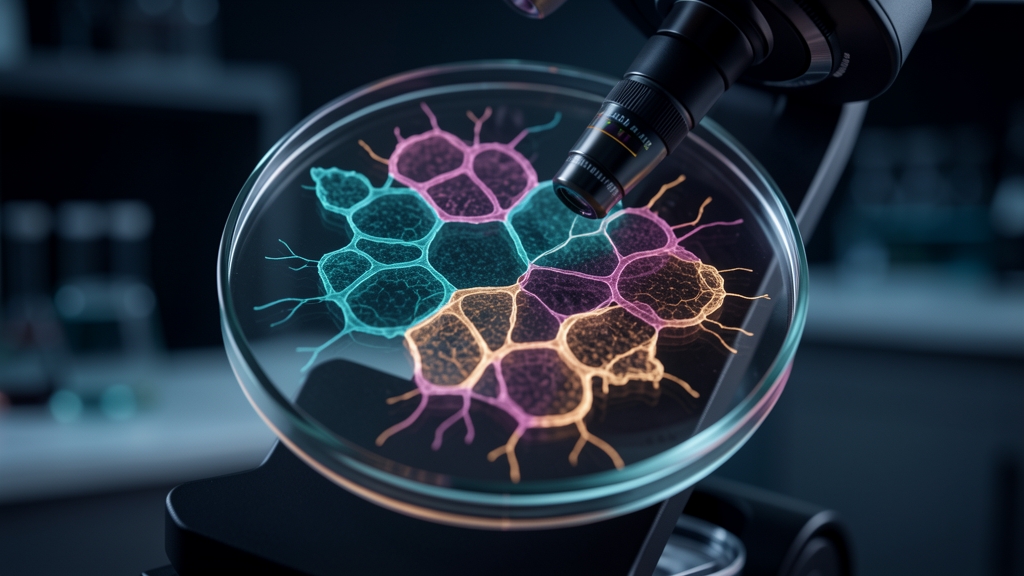
Enter spatial biology. This emerging field allows researchers to visualize not just what a cell is, but exactly where it resides within the complex architecture of a tumor or a viral infection site. It provides the "GPS coordinates" for biology. By preserving the spatial context, scientists can now observe how a T-cell interacts with a regulatory cell, or how a virus builds a protective micro-environment that shields it from the body’s natural defenses.
The Multi-Omics Convergence
While spatial biology provides the map, multi-omics provides the depth. Modern research is no longer satisfied with just looking at RNA (transcriptomics). To truly decode immune resistance, researchers are layering multiple "omes" simultaneously:
* Genomics: The foundational blueprint of the cells.
* Transcriptomics: Which genes are actually being "read" and expressed.
* Proteomics: The functional proteins that carry out cellular work.
* Metabolomics: The chemical byproducts that signal the metabolic state of the environment.
When these layers are integrated, a multidimensional picture emerges. We can see, for instance, how a specific metabolic byproduct in a tumor's microenvironment triggers a genetic change in an immune cell, which then alters its protein expression, ultimately rendering it unable to kill the cancer cell. This is "immune ecosystem remodeling" in real-time.
AI: The Intelligence Behind the Integration
The sheer volume of data generated by this approach is staggering. A single spatial multi-omics experiment can produce terabytes of high-dimensional data that would take a human researcher lifetimes to parse. This is where artificial intelligence becomes the indispensable engine of discovery.
Current AI models are being deployed to perform "data fusion," stitching together disparate omics layers into a cohesive biological narrative. Machine learning algorithms are being trained to recognize patterns of "immune exhaustion" or "viral evasion" that are invisible to the naked eye. These models can predict how an ecosystem might remodel itself in response to a specific drug, allowing researchers to simulate clinical trials in a digital environment before a single patient is ever treated.
This isn't just about pattern recognition; it's about predictive modeling. We are moving toward a future where AI can tell a clinician: "Given this patient's specific spatial cellular architecture, this immunotherapy will likely fail because the tumor is building a physical and chemical barrier. Instead, use this combination therapy to break down that barrier first."
Market Implications and the Future of Precision Medicine
The impact of this technological convergence extends far beyond academia. The pharmaceutical industry is watching closely. The current "hit-or-miss" nature of drug development is incredibly costly; many drugs fail in Phase II or III clinical trials because they cannot overcome the complex resistance mechanisms of the human immune system.
By integrating spatial and multi-omic data earlier in the R&D pipeline, biotech companies can design "smarter" drugs—molecules specifically engineered to disrupt the remodeling processes that lead to resistance. This promises to shorten drug development cycles and significantly increase the success rate of new therapies.
However, challenges remain. The cost of spatial biology platforms and the computational requirements for AI-driven multi-omics integration are currently high, creating a barrier to entry for smaller research institutions. Furthermore, the biological complexity of the human immune system is so vast that our current models, while advanced, are still only scratching the surface.
The Verdict
We are witnessing a transition from descriptive biology to predictive engineering. The integration of AI, spatial biology, and multi-omics is turning the "black box" of immune resistance into a transparent, navigable landscape. As these technologies mature and become more accessible, the goal of truly personalized, resistance-proof medicine moves from the realm of science fiction into the immediate horizon of clinical reality.