The roar of high-performance engines has long been the heartbeat of Goodwood. But as the crowds move away from the track and toward the specialized, quiet corridors of the FOS Future Lab, a different kind of energy takes hold. This is not the visceral, mechanical thunder of a combustion engine; it is the silent, high-frequency hum of a civilization in transition.
The 2026 iteration of the Future Lab represents a significant pivot in how we perceive the intersection of mobility and technology. No longer is the focus confined to how we move from point A to point B on four wheels. Instead, the lab has become a holistic showcase of the "technological stack" that will define the next decade: aerospace, computing, robotics, and biotechnology.
The Lunar Logistics Frontier
Perhaps the most striking shift in the lab’s current landscape is the heavy presence of aerospace hardware. We are seeing a transition in space exploration from "exploration for curiosity" to "infrastructure for habitation."
The exhibits currently on display move past the era of simple satellite deployment. Instead, they focus on the gritty, practical realities of lunar settlement. This includes modular, self-assembling habitats designed to withstand extreme thermal cycling and autonomous, multi-terrain rovers capable of navigating the lunar regolith without human intervention. The engineering showcased here is less about the "glamour of the launch" and more about the "reliability of the stay." It is a sobering, highly technical look at the supply chains and robotic systems required to sustain human life beyond Earth’s orbit.
The Quantum and the Cognitive
While the aerospace section looks upward, the computing wing looks inward, at the very fabric of data. The presence of quantum computing prototypes at the lab signals a major milestone in the democratization of high-level physics.
We are witnessing the transition of quantum technology from the highly controlled, cryogenic environments of university labs to more modular, scalable architectures. These systems aren't just faster versions of current computers; they represent a fundamental paradigm shift in how we solve complex problems—from optimizing global logistics networks to simulating molecular structures for new materials.
Intertwined with this is the evolution of Artificial Intelligence. In the Future Lab, AI is stripped of its "chatbot" persona and presented in its most potent form: as a diagnostic and predictive engine. In the health-tech sector of the pavilion, AI-driven diagnostics are being demonstrated through real-time biological data analysis. These systems can identify microscopic anomalies in physiological patterns long before they manifest as clinical symptoms. This is the promise of precision medicine—shifting the healthcare model from reactive treatment to proactive, data-driven management.
The Kinematics of Autonomy
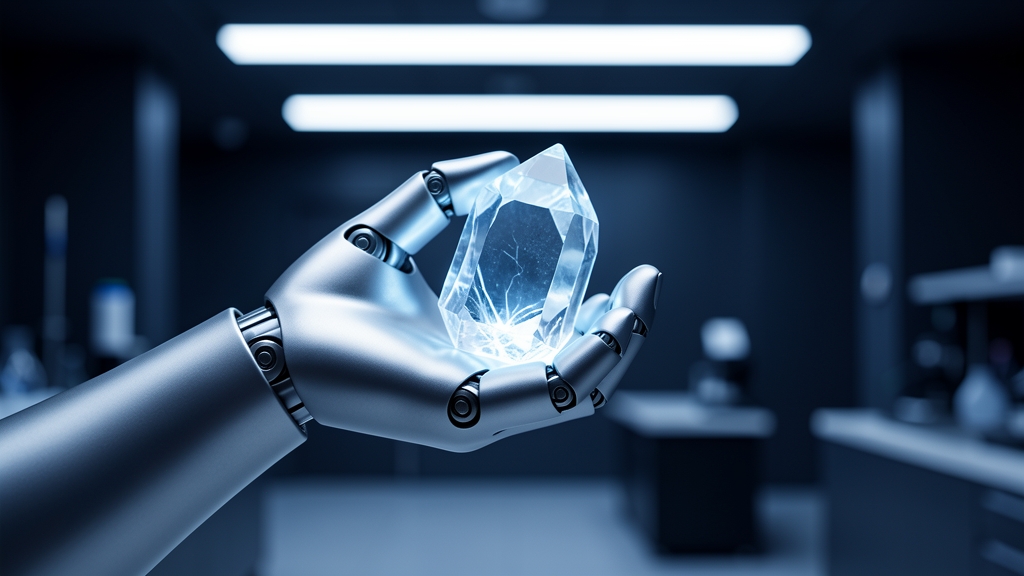
The robotics displays bridge the gap between the digital and the physical. This isn't the clunky, pre-programmed automation of the previous decade. The robots on display here exhibit a level of sensory integration and fluid movement that suggests a new era of human-robot collaboration.
These machines are being designed for "edge utility"—operating in unstructured environments like construction sites, disaster zones, or even domestic settings. The focus is on tactile intelligence: the ability for a machine to sense pressure, texture, and resistance, allowing it to interact with the world with the same nuance as a human hand. This convergence of advanced computer vision and sophisticated actuation is what makes these machines feel less like tools and more like partners.
The Convergence Thesis
What makes the Future Lab essential viewing for the modern tech enthusiast is not just the individual breakthroughs, but the synthesis of these fields.
We are seeing the "convergence of everything." The same AI that diagnoses a patient is being used to navigate a lunar rover; the same quantum computing power used to simulate new materials is being applied to optimize the energy grids that power our robotic fleets.
The Lab is making a profound statement: the silos of industry are collapsing. To understand the future of travel, one must understand the future of energy and computing. To understand the future of health, one must understand the future of data and sensors.
As we walk through the pavilion, the takeaway is clear. The future isn't arriving as a single, monolithic event. It is arriving as a complex, interconnected web of technologies that, once integrated, will fundamentally rewrite the rules of human capability. The roar of the engines may still dominate the track, but the quiet revolution in the Future Lab is what will actually change the world.