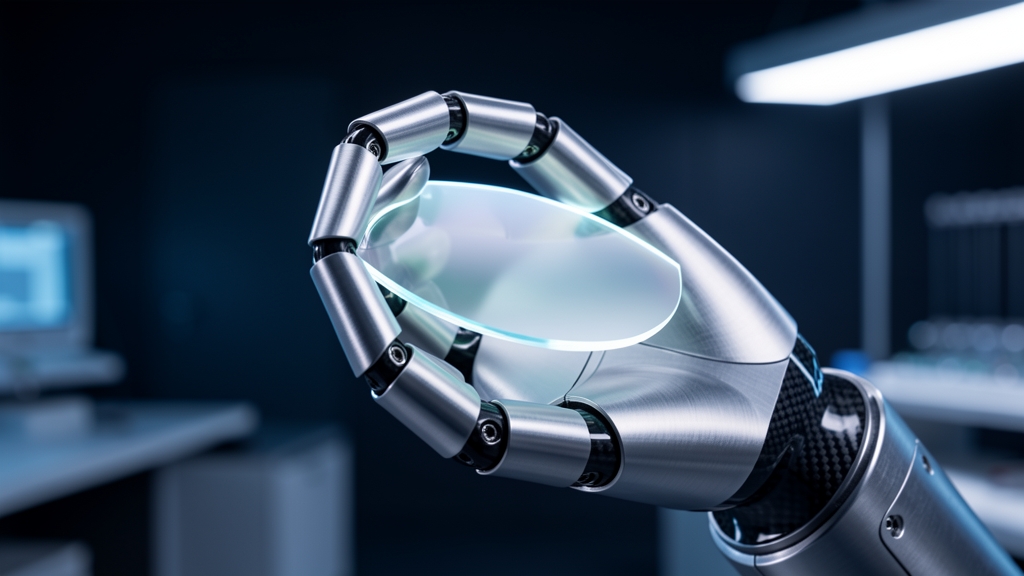
For the better part of a decade, the global artificial intelligence discourse has been dominated by "digital intelligence"—large language models that live in data centers, process text, and generate images. But as the hype surrounding generative AI reaches a fever pitch, a new frontier is emerging, one that moves intelligence out of the cloud and into the physical world. Japan is moving aggressively to claim leadership in this domain, positioning "Physical AI" as the primary engine for its next generation of national growth.
This is not merely a technological upgrade; it is a fundamental shift in industrial strategy. While the United States and China compete for dominance in the realm of massive neural networks and data processing, Japan is leveraging its historical supremacy in precision hardware to bridge the gap between digital reasoning and physical action.
The Rise of Embodied Intelligence
Physical AI, often referred to in academic circles as "Embodied AI," refers to intelligent systems that possess the ability to perceive, reason, and interact with their surroundings through physical actuators. Unlike a chatbot that can describe how to fold a shirt, a Physical AI system is integrated into a robotic arm or an autonomous vehicle that can actually perform the task, adjusting in real-time to the tactile nuances of the fabric.
The Japanese strategy rests on a tripartite integration of three core industries: semiconductors, robotics, and automotive manufacturing. By fusing these sectors, Tokyo seeks to create a vertically integrated ecosystem where the silicon, the brain, and the body are designed in unison.
The Industrial Triad: Robotics, Auto, and Silicon
1. Robotics: From Automation to Autonomy
Japan remains a global powerhouse in industrial robotics, home to giants that command much of the world's factory floor automation. However, the traditional model of robotics relies on "pre-programmed" movements—highly efficient but rigid. The integration of Physical AI allows these machines to move from automation to true autonomy. Instead of repeating a single motion, a robot equipped with physical AI can navigate unstructured environments, handle unpredictable objects, and learn new tasks through reinforcement learning, effectively becoming a cognitive worker rather than a mechanical tool.
2. Automotive: The Software-Defined Vehicle
The automotive sector is undergoing a metamorphosis from mechanical engineering to software-defined mobility. In the context of Japan's new strategy, the car is being reimagined as a mobile agent. This goes beyond simple driver assistance; it involves integrating sophisticated sensor suites and edge-computing capabilities that allow vehicles to act as autonomous entities capable of complex decision-making in dense, unpredictable urban environments.
3. Semiconductors: The Edge Computing Mandate
Perhaps the most critical component of this strategy is the push for specialized semiconductor architecture. Traditional AI relies on massive, power-hungry GPU clusters in the cloud. Physical AI, however, requires "Edge AI"—processing power that is localized, low-latency, and energy-efficient. To move a robotic limb or steer a car, decisions must be made in milliseconds. Waiting for a round-trip to a data center is not an option. This necessitates a new breed of chips designed specifically for high-speed sensory processing and real-time inference.
The Taiwan-Japan Silicon Nexus
A central pillar of this national strategy is the deepening collaboration with Taiwan. While Japan excels in high-precision manufacturing and material science, Taiwan holds the world's most advanced semiconductor fabrication capabilities.
By aligning Japanese robotics and automotive expertise with Taiwanese silicon leadership, the two nations are attempting to build a "hardware-software moat" that is difficult for software-centric economies to replicate. This partnership is designed to secure the entire value chain, from the design of AI-optimized logic gates to the final assembly of intelligent machines. It is a move toward "semiconductor sovereignty," ensuring that the physical hardware of the future is not subject to the whims of volatile global supply chains.
Technical Hurdles: The Sim-to-Real Gap
Despite the strategic clarity, the path to physical AI dominance is fraught with technical complexities. The most significant of these is the "sim-to-real" gap. Training intelligent agents requires massive amounts of data, which is easily gathered in digital simulations. However, the physics of the real world—friction, gravity, light, and unpredictable human interference—are notoriously difficult to model perfectly.
Bridging this gap requires massive investments in high-fidelity simulation environments and advanced sensor fusion technology. If the AI’s understanding of the world is even slightly off, the physical consequences in the real world can range from minor errors to catastrophic mechanical failures.
Market Implications and the Global Landscape
The implications for the global economy are profound. If Japan succeeds, the center of gravity for the AI revolution may shift. We may see a transition from an era where "intelligence" is a service provided by a screen, to an era where "intelligence" is a commodity embedded in the very fabric of our physical infrastructure.
For investors and tech leaders, the message is clear: the next trillion-dollar industry may not be the one that builds the best model, but the one that builds the best body for that model to inhabit. Japan is betting that the future of AI isn't just something you talk to—it's something that works alongside you.