The Meta Paradox: Why Wall Street is Torn Over Zuckerberg’s Massive Cloud Pivot
For over a decade, Meta has been defined by the social graph—a digital web of connections spanning billions of users across Facebook, Instagram, and WhatsApp. But the company is currently undergoing a tectonic shift in its core identity. Mark Zuckerberg is no longer just building social apps; he is building the backbone of the artificial intelligence era.
The strategy is clear: Meta is pivoting toward a massive, vertically integrated AI cloud infrastructure. The goal is to move beyond being a mere consumer of AI technology to becoming the primary provider of the computational power and models that drive the global economy. However, as the company moves deeper into this capital-intensive frontier, a glaring contradiction is emerging that is leaving Wall Street divided.
The Infrastructure Play: Beyond the Social Graph
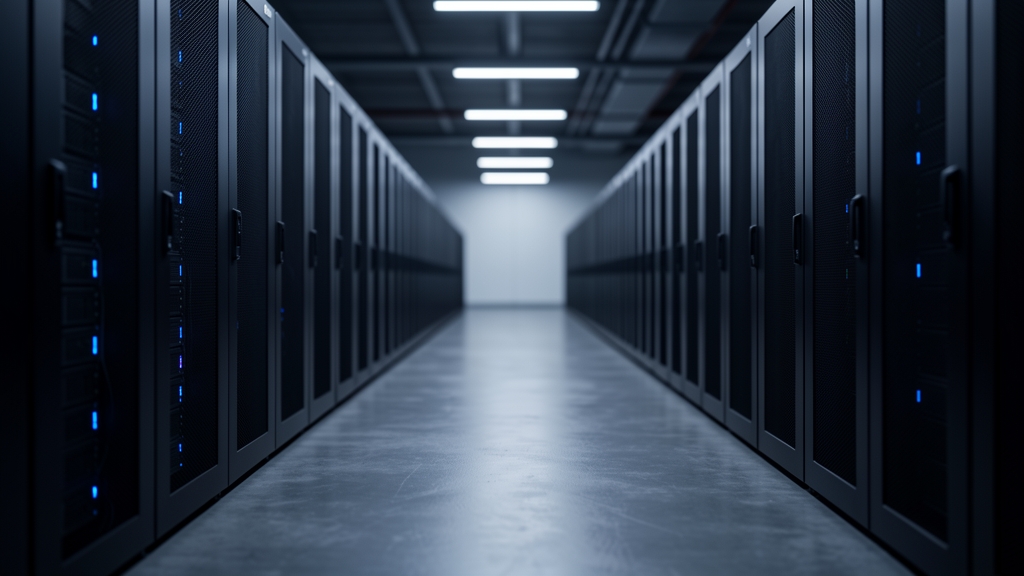
The pivot is centered on two main pillars: custom silicon and massive-scale data centers. Meta is moving away from its reliance on third-party hardware providers, doubling down on its own proprietary chips, such as the Meta Training and Inference Accelerator (MTIA). By designing its own silicon, Meta aims to optimize the efficiency of its Llama-series models, reducing the astronomical costs associated with training and running large-scale inference.
This is not just a technical upgrade; it is a fundamental business model change. Meta is effectively attempting to build a competitor to the hyperscalers—Amazon Web Services (AWS), Microsoft Azure, and Google Cloud. By offering high-performance AI compute and highly optimized open-weight models, Meta seeks to capture a slice of the enterprise AI market, transforming its massive data centers from cost centers into revenue-generating engines.
The Llama Trojan Horse
The brilliance of the Meta strategy lies in its software ecosystem. By championing the Llama family of models as the industry standard for open-weight AI, Meta is creating a massive "developer moat." When developers build their applications on top of Llama, they are implicitly optimizing for the hardware that runs Llama best: Meta’s own infrastructure.
This creates a virtuous cycle. The more the industry adopts Llama, the more Meta can refine its hardware and cloud services to support those specific workloads. It is a sophisticated play to ensure that even if Meta doesn't own the "front end" of the AI revolution, it owns the "plumbing."
The Catch: The Capex Monster
If the strategy is so sound, why is the market hesitant? The answer lies in the "catch" that keeps CFOs and analysts awake at night: the sheer, unadulterated scale of Capital Expenditure (Capex).
To compete with the likes of Microsoft and Google, Meta is spending tens of billions of dollars annually on GPUs, custom silicon, and the physical real estate required to house them. This is a high-stakes game of chicken. The company is betting that the future of computing is so valuable that the current, eye-watering costs of building the infrastructure will be dwarfed by the eventual returns.
The risk is twofold:
* The ROI Lag: There is a massive disconnect between the speed of spending and the speed of monetization. Meta is pouring capital into infrastructure today, but the enterprise market for "AI-as-a-Service" is still in its infancy. Investors fear a scenario where Meta builds a world-class cloud only to find that the market demand does not materialize fast enough to offset the depreciation of these assets.
* The Efficiency Trap: Unlike AWS, which has decades of experience managing diverse cloud workloads, Meta’s infrastructure is being built with a specific focus on its own AI needs. If the AI boom shifts toward a different architectural paradigm—such as a move away from current transformer models toward something more efficient—Meta could find itself holding a massive, expensive pile of specialized hardware that is no longer optimal.
The Energy Wall
Beyond the financial risks lies a physical constraint that no amount of capital can easily solve: power. The compute requirements for next-generation AI models are growing exponentially, and the global energy grid is struggling to keep pace.
Meta’s pivot toward a cloud-first model means they are no longer just a tenant of the electrical grid; they are a major industrial consumer. Securing the gigawatts of power necessary to run their planned data center expansions is becoming a geopolitical and logistical nightmare. The cost of energy, combined with the necessity of investing in sustainable power sources to meet ESG goals, adds yet another layer of complexity to the financial equation.
A Binary Outcome
Meta is currently in a period of extreme transition. The company is effectively running two businesses simultaneously: a highly profitable, cash-generative social media machine and a high-burn, speculative infrastructure powerhouse.
For the visionary investor, Meta is the ultimate play on the AI era—a company that is building the very foundation upon which the next decade of computing will rest. For the pragmatist, Meta is a company taking on "trillion-dollar risks" with money earned from advertising, gambling that the hardware-as-a-service market will be large enough to justify the most expensive pivot in tech history.
As the company continues to scale its MTIA deployment and expand its global data center footprint, the market will be watching one metric above all others: the ratio of Capex to long-term enterprise revenue. The window for error is closing, and the stakes have never been higher.