The landscape of generative artificial intelligence is shifting. For years, the conversation surrounding Midjourney has been centered on aesthetics—the ability to turn a string of text into a breathtaking digital masterpiece. But today, the company is announcing a pivot that is less about art and more about anatomy.
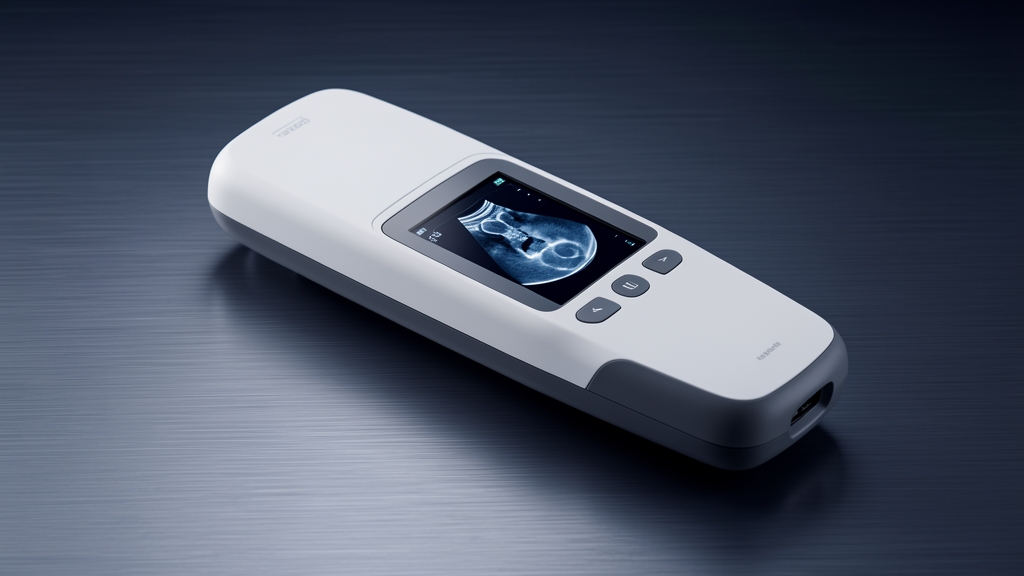
Midjourney is venturing into the highly regulated, intensely precise world of medical diagnostics. The company is developing a proprietary full-body imaging system that aims to do what has long been considered a hardware impossibility: using AI-enhanced ultrasound technology to provide the high-resolution clarity of a traditional Magnetic Resonance Imaging (MRI) scan.
The End of the "Gold Standard" Monolith?
For decades, the MRI has reigned as the gold standard for non-invasive internal imaging. However, the technology is notoriously difficult to scale. MRI machines are massive, incredibly expensive, require specialized shielded rooms, and demand a level of stillness from patients that can be difficult to achieve. Furthermore, the experience is often claustrophobic and loud, making it a stressful ordeal for many.
Midjourney’s proposed solution seeks to bypass these physical limitations by shifting the burden from hardware to intelligence. Instead of relying on the massive, superconducting magnets found in an MRI, Midjourney is betting on a hybrid approach: high-frequency ultrasound arrays coupled with a massive, biologically-trained latent diffusion model.
The core concept is "generative reconstruction." In traditional ultrasound, the image quality is limited by the physics of sound waves and the "noise" inherent in the medium. Midjourney intends to use its expertise in denoising and image synthesis to take low-fidelity, real-time ultrasound data and reconstruct it into high-fidelity, three-dimensional anatomical maps.
The Technical Frontier: Diffusion as a Diagnostic Tool
The technical leap here is significant. While generative AI in the art world is often criticized for "hallucinating" details that don't exist, Midjourney is attempting to invert this process for medical utility.
The company's approach involves several key technical pillars:
* Latent Space Biological Mapping: Unlike models trained on billions of internet images, this system is being trained on massive, curated datasets of synchronized MRI and ultrasound scans. This allows the AI to understand the probabilistic relationship between a grainy ultrasound signal and a high-resolution MRI structure.
* Real-Time Super-Resolution: The system aims to provide "live" reconstruction. As the ultrasound probe moves, the AI fills in the gaps, essentially predicting the next frame of a high-resolution volumetric scan with millisecond latency.
* Acoustic-to-Visual Translation: By treating the ultrasound signal as a "prompt" rather than a finished product, the model can interpret wave reflections as structured data, using generative layers to smooth out artifacts and clarify tissue boundaries.
If successful, this would represent a fundamental shift in how we view medical imaging. We would move from "capturing" an image to "reconstructing" a reality based on captured data.
The Hallucination Problem: A Clinical Nightmare
The pivot is not without its critics, and the primary concern is the most famous flaw of generative AI: hallucinations. In a digital painting, a six-fingered hand is a quirk; in a medical scan, a "hallucinated" healthy tissue pattern where a tumor actually resides is a catastrophe.
The stakes of Midjourney’s move are existential. If the model "fills in the blanks" too aggressively, it risks smoothing over the very pathologies doctors are looking for. The "beauty" of a Midjourney image—its ability to create a coherent, pleasing whole—is the exact opposite of what is required in a clinical setting, where every pixel must be a faithful representation of biological fact.
Industry experts are questioning how the company intends to solve the "interpretability" problem. Can a doctor trust a scan that has been partially synthesized by an algorithm? To address this, Midjourney is reportedly working on "uncertainty mapping," a feature that would visually flag areas of the image where the AI's confidence is low, effectively telling the clinician: “I have reconstructed this area, but please verify with manual probe movement.”
Market Disruption and Regulatory Hurdles
The economic implications are staggering. If Midjourney can deliver MRI-quality imaging through a portable, ultrasound-based device, they aren't just competing with other AI startups; they are challenging the hegemony of giants like GE Healthcare, Siemens Healthineers, and Philips.
A portable, AI-driven imaging system would allow for:
1. Point-of-Care Diagnostics: High-end imaging in rural clinics, ambulances, or even home-care settings.
2. Reduced Cost per Scan: Lowering the barrier to entry for developing nations and underfunded public health systems.
3. Increased Throughput: Faster scans that don't require the logistical overhead of a dedicated radiology suite.
However, the road to market is paved with regulatory obstacles. The FDA and EMA have strict frameworks for "Software as a Medical Device" (SaMD). Midjourney will need to prove not just that their images look real, but that they are clinically accurate across diverse populations, ages, and pathologies. The transition from a consumer-facing creative tool to a Class III medical device is perhaps the most difficult pivot in the history of the tech industry.
Midjourney is no longer just painting dreams; it is attempting to map the reality of the human body. Whether it succeeds or stumbles will redefine the boundary between artificial intelligence and biological truth.