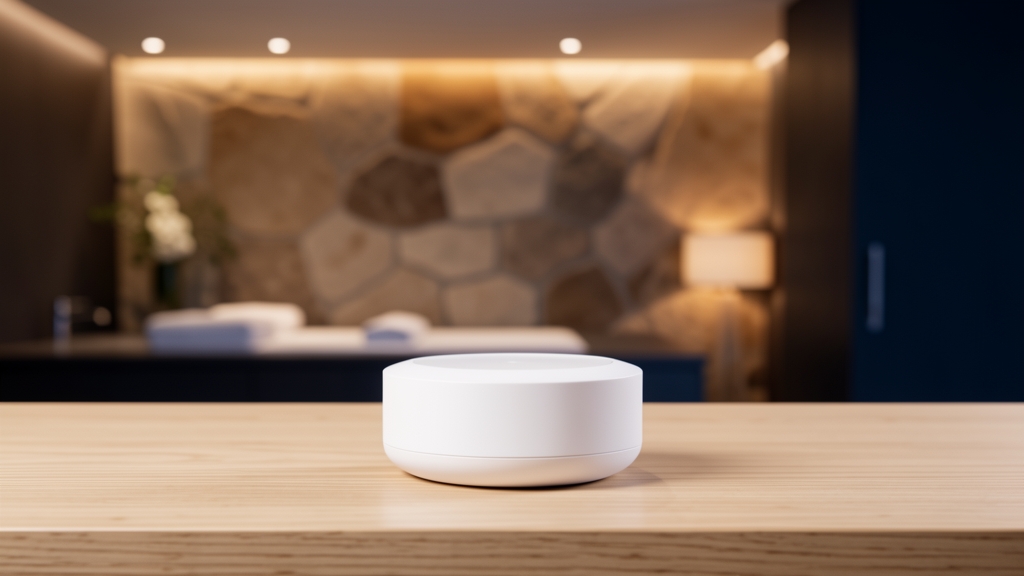
The boundaries of generative AI are blurring, moving from the ethereal realms of digital art into the tangible, biological realities of the human body. Midjourney, the laboratory that redefined how we perceive machine-generated aesthetics, has officially announced its entry into the health and wellness sector. This is not a mere expansion of a software suite; it is a fundamental shift in the company's mission—from modeling pixels to modeling physiology.
The announcement, which has sent shockwaves through both the Silicon Valley tech community and the wellness industry, centers on a proprietary technology designed to map a user’s physical state in under 60 seconds. The end goal is a closed-loop wellness ecosystem where high-speed biometric data informs immediate physiological interventions, specifically through precision-controlled thermal environments like saunas.
The Dolphin Method: Bio-Acoustic Sensing
At the heart of this pivot is a technical approach Midjourney describes as "bio-acoustic resonance." The technology draws heavy inspiration from the echolocation capabilities of dolphins. Just as cetaceans use sound waves to perceive the density, shape, and movement of objects underwater, Midjourney’s hardware utilizes high-frequency acoustic waves to "see" through the surface of human skin.
Unlike traditional medical imaging such as MRI or CT scans, which are time-consuming and often require specialized facilities, Midjourney’s approach appears to focus on non-invasive, rapid-response mapping. By analyzing how acoustic waves bounce off different tissue densities, bone structures, and fluid levels, the system creates a real-time, three-dimensional digital twin of the user's current physical state.
Key technical pillars of this "Dolphin Method" include:
* Sub-millimeter Volumetric Mapping: The ability to detect subtle changes in muscle tension and fluid retention.
* Latent Physiological Modeling: Using the same generative principles that power their image models to "fill in the gaps" of biological data, creating a continuous model of the user's health.
* Non-Ionizing Safety: Moving away from radiation-based imaging in favor of pure acoustic energy, making it suitable for frequent, daily use.
The Closed-Loop Wellness Workflow
Midjourney is not just selling a scanner; they are selling a protocol. The proposed workflow represents a radical automation of personalized wellness.
The process begins with the 60-second scan. Once the "biological digital twin" is generated, the AI analyzes the data against vast datasets of human homeostasis. It looks for markers of stress, inflammation, or metabolic fatigue. Once a deficiency or imbalance is identified, the system communicates directly with integrated thermal hardware.
In a practical setting—likely high-end wellness centers or smart homes—this translates to a seamless transition. The scanner informs the sauna of the exact temperature, humidity levels, and even infrared light frequencies required to optimize the user's recovery. If the scan detects high cortisol markers through skin temperature and tension, the sauna might deploy a lower-temperature, high-humidity protocol designed for parasympathetic nervous system activation.
A Paradigm Shift in Market Positioning
For years, Midjourney has occupied a unique space in the AI landscape: a creative tool that prioritizes "vibe" and aesthetic intuition over strict logic. By applying this "intuitive" modeling to the human body, they are positioning themselves against established giants like Apple, Oura, and various medical diagnostic firms.
However, Midjourney’s competitive advantage lies in its generative architecture. While traditional health tech focuses on tracking (measuring what happened), Midjourney seems focused on synthesizing (predicting what is needed). They are moving from a descriptive model of health to a prescriptive one.
The market implications are massive:
1. Hyper-Personalization: The era of "one size fits all" sauna settings or fitness regimes is effectively over.
2. The Convergence of AI and Hardware: Midjourney is signaling that software-only companies may struggle to dominate the wellness space without deep integration into physical environments.
3. Data-Driven Longevity: This technology fits perfectly into the burgeoning "longevity" market, where users are willing to pay a premium for data that can extend their biological lifespan.
The Ethical and Regulatory Frontier
With great technical capability comes significant scrutiny. The move into biometrics brings Midjourney face-to-face with stringent data privacy regulations. The data being collected—intimate, 3D biological maps—is perhaps the most sensitive information an individual can own. How Midjourney secures this "biological digital twin" will be the defining question for their survival in this new sector.
Furthermore, there is the "black box" problem. If an AI decides that a user needs a specific thermal intervention, and that intervention leads to an adverse health event, who is liable? The transition from generative art to generative health necessitates a level of regulatory oversight—likely involving health authorities—that the company has never had to navigate before.
As Midjourney moves from the canvas to the body, they are attempting to do more than just map our physical forms. They are attempting to master the feedback loop between technology and human biology. Whether this results in a new era of optimized human performance or a privacy nightmare remains to be seen.