For years, the name Midjourney has been synonymous with the cutting edge of generative aesthetics. Users have grown accustomed to the iterative dance of text-to-image prompts, watching as latent space unfolds into breathtaking visual realities. However, the company is currently executing a pivot so radical it threatens to redefine the boundaries between artificial intelligence, wellness, and biometric surveillance.
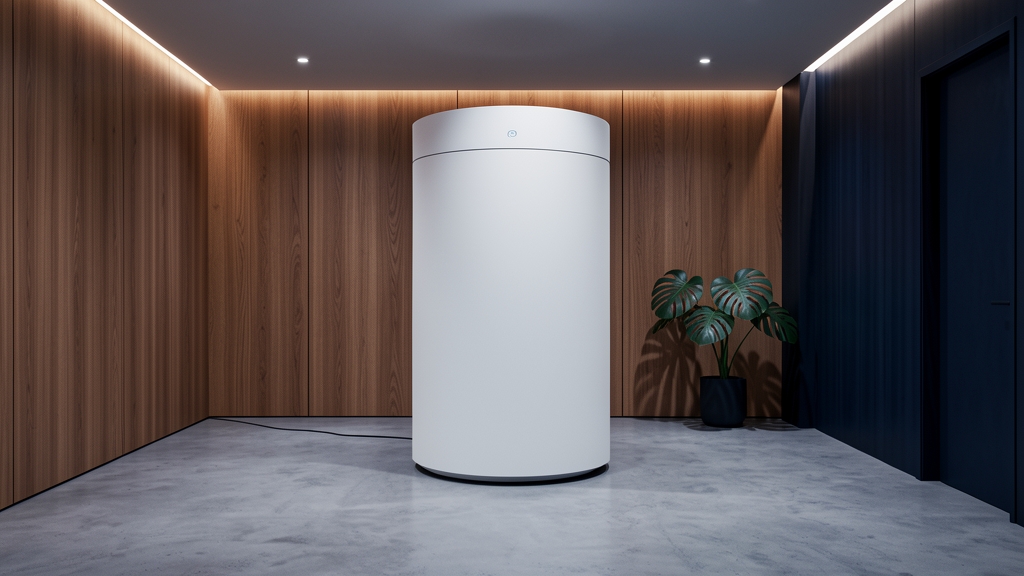
Midjourney is moving beyond the screen. The company is currently developing a proprietary, 60-second full-body ultrasonic scanner, designed to capture high-resolution internal and external biological data. Even more startling is the intended delivery method: a network of high-end, spa-like scanning locations. This is not a clinical rollout; it is a consumer-facing lifestyle integration that positions biological data as the next frontier of personal expression.
The Technology: Speed, Sound, and Synthesis
The technical challenge Midjourney faces is immense. Traditional medical-grade ultrasonography is a slow, operator-dependent process. Capturing a comprehensive, high-fidelity map of the human body usually requires significant time and specialized expertise. Midjourney’s claim of a 60-second full-body scan suggests a breakthrough in both transducer density and computational reconstruction.
Industry analysts speculate that the company is leveraging its expertise in generative modeling to solve the "sparse data" problem inherent in rapid scanning. Rather than relying solely on raw acoustic echoes, Midjourney’s system likely uses advanced neural networks to "fill in the blanks," synthesizing a complete, coherent volumetric model from a rapid burst of ultrasonic waves. This process—essentially using AI to predict what the missing biological structures must look like—is technically brilliant but raises immediate questions about medical accuracy versus aesthetic fidelity.
The "Spa" Strategy: Wellness as a Trojan Horse?
Perhaps the most controversial aspect of this rollout is the environment. Midjourney is eschewing the sterile, intimidating atmosphere of a doctor's office in favor of "spa-like" scanning centers. These locations are described as minimalist, serene environments designed to reduce the friction of data collection.
By framing the scan as a wellness ritual rather than a medical procedure, Midjourney is tapping into the massive global wellness economy. This strategy lowers the psychological barrier to entry, making the surrender of highly sensitive biometric data feel like a luxury self-care experience. For the tech-savvy consumer, the scan is marketed as a way to create a "perfect digital twin"—a high-fidelity, volumetric avatar that can be manipulated through the same prompt-based logic that has made Midjourney a household name in digital art.
The Data Dilemma: Biometrics in the Age of Generative AI
The pivot from generating images of non-existent people to capturing the physiological blueprints of real ones creates a massive regulatory and ethical vacuum.
When Midjourney collects a text prompt, the data is ephemeral and low-risk. When Midjourney collects an ultrasonic scan, it is acquiring a permanent, unchangeable identifier. This data includes not just external geometry, but potentially insights into bone density, organ morphology, and subcutaneous tissue composition.
Several critical concerns are emerging:
* Biological Deepfakes: If a user possesses a high-fidelity volumetric model of their body, what prevents that data from being used to create hyper-realistic "biological deepfakes"? The potential for identity theft moves from the visual realm into the physiological realm.
* The Ownership of the "Self": If an AI model is trained on your unique biological structure to help you generate "idealized" versions of yourself, who owns the resulting data? Is your biological signature a proprietary input or a protected medical record?
* Regulatory Gray Zones: Current frameworks like HIPAA in the United States or GDPR in Europe are designed around specific definitions of "medical providers" or "data controllers." Midjourney, as a generative AI company, occupies a nebulous middle ground. They are not a hospital, yet they are collecting data that is arguably more sensitive than any traditional social media platform.
Market Impact: The Race for the Digital Twin
Midjourney’s move is a clear signal of where the next era of AI competition lies. The battle is no longer just about who can write the best code or generate the most beautiful image; it is about who can most effectively bridge the gap between the digital and the physical.
Companies like Apple, Google, and Tesla are all vying for dominance in the sensor and spatial computing markets. Midjourney is attempting a "leapfrog" maneuver—bypassing the smartphone and the headset to go straight to the source: the human body. By integrating biological data directly into the generative workflow, they are building an ecosystem where the "prompt" is no longer something you type, but something you are.
As the first scanning locations prepare for pilot programs, the industry is watching closely. Is this the dawn of a new era of personalized wellness and digital expression, or is it the ultimate encroachment of Big Tech into the very fabric of our biological existence?