The Death of the Prompt Box: Inside Midjourney’s New Scrolling Style Creator
For the better part of two years, the relationship between a creator and generative AI has been defined by a singular, often frustrating barrier: the text box. Users act as "prompt engineers," laboriously typing strings of adjectives, lighting conditions, and artist names, hoping the latent space responds with something resembling their vision. It is a process of trial and error that often feels more like coding than creating.
Midjourney is attempting to break that cycle.
With the unveiling of its experimental "Scrolling Style Creator," the platform is signaling a fundamental pivot in how humans interact with diffusion models. This isn't just a UI facelift; it is a philosophical shift from instructing an AI to exploring an AI. By moving away from heavy linguistic input and toward a tactile, visual workflow, Midjourney is betting that the future of art lies in serendipity rather than syntax.
The Mechanics of Serendipity: Pins and Micro-Grids
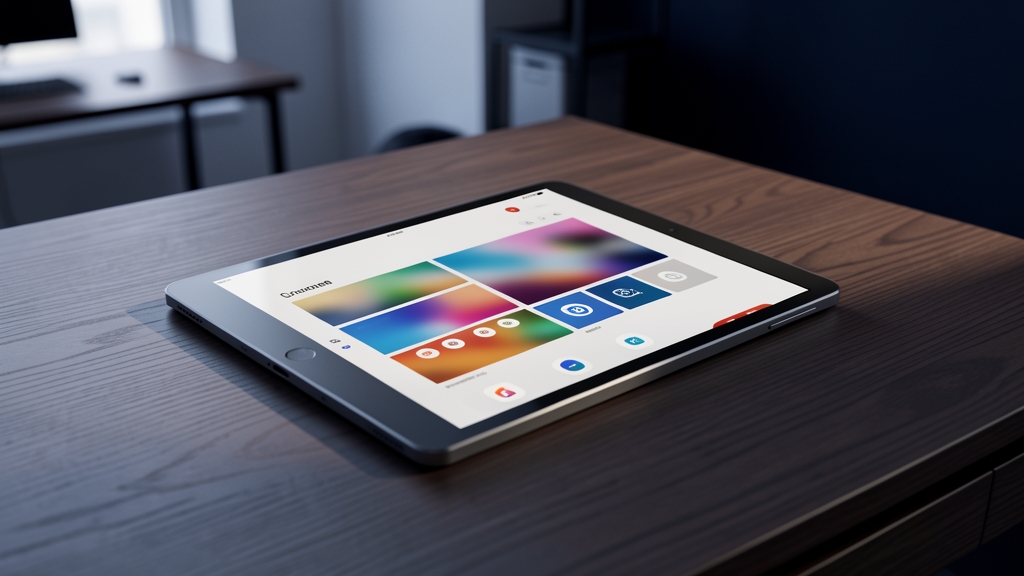
The Scrolling Style Creator introduces a workflow that feels remarkably more intuitive, drawing inspiration from the "infinite scroll" mechanics found in social media but repurposing them for high-level aesthetic curation. At the heart of this update are two key functional elements: Pins and Small Grids.
The Power of the "Pin"
In the current iteration, users can "pin" specific aesthetic elements as they scroll through a stream of generated styles. Instead of trying to describe "chiaroscuro lighting with a 1970s film grain" in a text prompt, a user can simply find a visual instance of that texture and pin it. Once pinned, that aesthetic becomes a persistent anchor in the generation process. This allows for a modular approach to style building, where a user can "collect" visual DNA from disparate images to construct a completely new, hybrid aesthetic.
Micro-Grids for Rapid Iteration
Accompanying the pins is the introduction of small, interactive grids. Rather than being presented with a single "best" image, the interface presents clusters of stylistic variations. These grids allow creators to observe how small shifts in a style affect a subject in real-time. It transforms the act of generation from a "one-and-done" request into a granular, comparative study. This micro-sampling approach drastically reduces the cognitive load required to fine-tune a concept, allowing the creator to stay in a state of "flow" rather than breaking rhythm to re-type a prompt.
Deconstructing the Aesthetic: The "Reversed Order" Logic
Perhaps the most technically intriguing aspect of the update is the "Reversed Order" functionality. In traditional prompting, the hierarchy of words dictates the weight of the output—the first words usually carry the most influence. Midjourney’s new tool introduces a way to invert this relationship.
By employing a reversed order logic within the scrolling interface, the tool allows users to deconstruct the "influence hierarchy" of a style. This means a user can prioritize the subtle, secondary characteristics of an image—the way light hits a surface or the specific grain of a texture—over the primary subject matter. It is a sophisticated way of manipulating the weights within the model's latent space without needing to understand the underlying math of --iw (image weight) parameters. It essentially gives the user a "reverse dial" to find the hidden nuances that make a style unique.
From Prompt Engineer to Visual Curator
This shift has profound implications for the identity of the AI artist. The term "prompt engineer" has long been used to describe the skill set required to navigate these models, but it often implies a level of technical rigidity that stifles true creativity.
The Scrolling Style Creator moves the user's role from an engineer to a curator. The "work" is no longer about finding the perfect sequence of words; it is about recognizing, selecting, and combining visual patterns. This democratizes the process for those who lack linguistic precision but possess a keen visual eye, while simultaneously providing professional designers with a much faster, more tactile toolkit for mood boarding and concept development.
The Competitive Landscape: Precision vs. Serendipity
Midjourney’s move is a calculated strategic play. While competitors like DALL-E 3 have doubled down on natural language processing—aiming to make the AI understand complex, conversational instructions—Midjourney is moving in the opposite direction. They are building a proprietary visual language.
If DALL-E 3 is a highly intelligent assistant that follows your orders, Midjourney is becoming a sophisticated instrument that responds to your touch. By prioritizing the "adventure" of discovery, Midjourney is carving out a niche as the premier tool for professional creatives who value the "happy accident" and the organic evolution of an idea.
As this experimental feature rolls out, the industry will be watching closely. If the Scrolling Style Creator succeeds in making generative art feel less like a task and more like a journey, it may well set the standard for the next decade of human-AI collaboration.