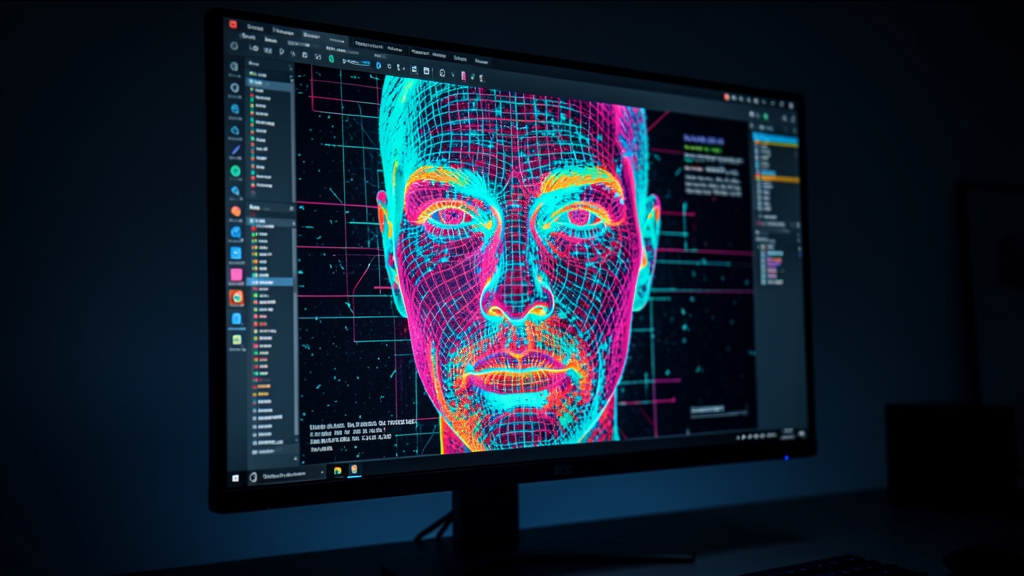
The era of the "binary detection" battle is reaching a breaking point. For years, the tech industry has engaged in a relentless arms race: generative AI models create increasingly convincing deepfakes, and detection algorithms scramble to find the telltale pixel artifacts or unnatural blinking patterns that give them away. However, this approach has always been reactive, playing a perpetual game of catch-up.
A new breakthrough from researchers at the University of California, Riverside, promises to change the fundamental geometry of this conflict. Instead of merely labeling a video as "real" or "fake," their new methodology aims to identify the specific source or generative architecture used to create the manipulation. This shift from detection to attribution marks a transition from defensive posturing to digital forensics.
The Flaw in the Status Quo
To understand why the UC Riverside research is significant, one must first understand why current deepfake detectors are failing. Most existing tools operate on a pattern-recognition basis. They look for specific visual inconsistencies—shadows that don't align, skin textures that are too smooth, or temporal jitters in video frames.
The problem is that Generative Adversarial Networks (GANs) and, more recently, Diffusion Models are designed to learn from these very failures. When a detection tool identifies a specific error, the generative model uses that feedback to refine its output, effectively "patching" the flaw in the next iteration. This creates a closed loop where the detector is essentially training its own replacement.
From Detection to Attribution
The UC Riverside team is bypassing this loop by focusing on what can be described as "model fingerprints." Every generative architecture leaves behind unique mathematical residues—subtle, high-frequency noise patterns and structural artifacts that are invisible to the human eye but inherent to the way specific algorithms process data.
Rather than looking for the errors of a deepfake, this new tool looks for the signature of the creator. By analyzing these microscopic digital traces, the tool can potentially categorize a video as having been produced by a specific class of model or even a specific version of a popular generative engine.
This is a profound distinction. Knowing a video is a deepfake tells you that you cannot trust it; knowing it was produced by a specific, known generative model allows investigators to trace the provenance of the disinformation, understand its technical capabilities, and potentially link it to specific actors or automated botnets.
The Technical Deep-Dive: Forensic Fingerprinting
While the full technical specifications are still being integrated into broader forensic frameworks, the core mechanism relies on advanced signal processing and deep learning. The researchers are leveraging the fact that different generative processes—such as the way a GAN handles latent space transitions versus how a Diffusion model denoises an image—produce distinct statistical distributions in the pixel data.
Key areas of focus include:
* Spectral Analysis: Examining the frequency domain of the video to identify periodic patterns that are characteristic of certain upsampling methods used in AI generation.
* Temporal Consistency Modeling: Analyzing how the "noise" evolves over time, as different models exhibit unique ways of maintaining (or failing to maintain) coherence across frames.
* Architecture-Specific Artifacts: Identifying the unique "mathematical bias" that specific neural network structures impose on the final output.
Market and Societal Implications
The implications of this technology extend far beyond the laboratory. We are looking at a potential paradigm shift across several high-stakes sectors:
1. Digital Journalism and Fact-Checking:
News organizations are currently struggling to verify user-generated content in conflict zones and political upheaval. A tool that provides attribution allows editors to move beyond skepticism toward a verifiable chain of custody for digital media.
2. Legal and Judicial Systems:
As deepfakes become a more potent tool for fraud and character assassination, the legal system will require rigorous standards for digital evidence. Forensic attribution provides a layer of evidentiary weight that simple "probability of being fake" scores cannot match.
3. Social Media Governance:
Platforms like X, Meta, and TikTok face immense pressure to moderate synthetic content. Moving toward attribution allows for more nuanced moderation—identifying not just the presence of AI, but the systematic deployment of specific tools used in coordinated influence operations.
The Counter-Move: An Escalating Arms Race
Despite the promise of the UC Riverside breakthrough, the road ahead is fraught with complexity. The most significant threat to this technology is "adversarial training." If the creators of generative models become aware of these forensic signatures, they can incorporate them into their training loops. They can essentially teach their AI to "scrub" its fingerprint, much like a professional thief might learn to avoid leaving specific types of trace evidence.
Furthermore, the sheer volume of video content uploaded to the internet every second presents a massive computational challenge. For attribution to be effective, it must be scalable, running in near real-time as content moves through global networks.
The Verdict
The UC Riverside research represents a sophisticated evolution in the field of digital trust. By pivoting from the "what" to the "how," researchers are finally addressing the root of the problem rather than just its symptoms. We are moving into an era where the battle for truth will not just be fought with better eyes, but with better mathematics. The question is no longer whether we can spot a lie, but whether we can find the machine that told it.