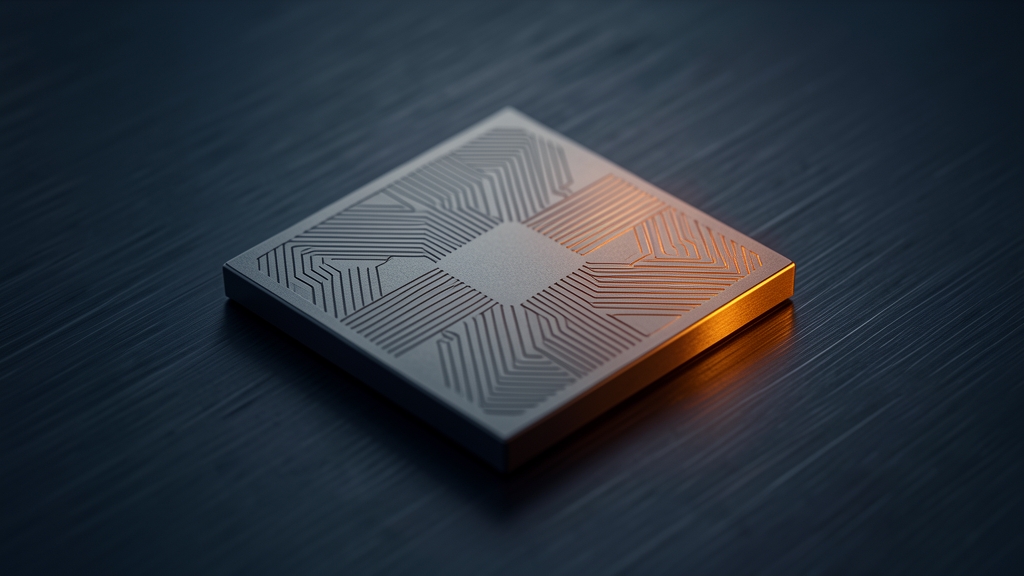
The era of the "black box" AI model is evolving into the era of bespoke silicon.
In a move that sends immediate shockwaves through the semiconductor landscape, OpenAI Group PBC has officially entered the hardware arena. Alongside Broadcom Inc., the artificial intelligence pioneer has unveiled "Jalapeño," a custom-engineered processor designed specifically to handle the massive computational demands of AI inference.
For the past few years, the narrative of the AI revolution has been synonymous with a single company: NVIDIA. As the dominant provider of the H100 and Blackwell architectures, NVIDIA has become the de facto landlord of the AI era. However, the unveiling of Jalapeño suggests that the industry's most influential software players are no longer content paying the "NVIDIA tax." They are ready to build their own foundations.
The Inference Bottleneck
To understand why Jalapeño matters, one must understand the distinction between training and inference. While training a model—the process of teaching a Large Language Model (LLM) to understand patterns—requires massive, brute-force computational power, inference is what happens when a user actually interacts with the model. Every time you ask a chatbot a question, every time an agent executes a command, you are running an inference cycle.
As models scale toward trillion-parameter complexities, the cost of inference has become the single greatest obstacle to the widespread commercialization of AI. Current general-purpose GPUs, while incredibly powerful, are designed to be "jacks of all trades." They are optimized for the diverse mathematical workloads of everything from gaming to scientific simulation.
Jalapeño, by contrast, is a specialized tool. By collaborating with Broadcom to develop an Application-Specific Integrated Circuit (ASIC), OpenAI is stripping away the overhead of general-purpose computing. This allows for a chip that does one thing—running transformer-based architectures—with unprecedented efficiency, lower latency, and significantly reduced power consumption.
The Broadcom Synergy
The choice of Broadcom as a partner is a calculated masterstroke. While NVIDIA provides a complete ecosystem (hardware plus the CUDA software layer), Broadcom has become the silent architect behind the custom silicon of the world’s largest hyperscalers. Broadcom’s expertise lies in high-speed connectivity and the complex design required to turn a conceptual architecture into a physical piece of silicon.
Industry analysts suggest that the Jalapeño chip likely focuses on three technical pillars:
* Optimized Memory Bandwidth: Utilizing advanced High Bandwidth Memory (HBM) integration to ensure that data moves fast enough to prevent the processor from "starving" during large-scale model queries.
* Reduced Precision Arithmetic: Unlike training chips that require high-precision math, inference can often be performed using lower-precision formats (such as FP8 or INT8) without losing significant intelligence. Jalapeño is reportedly hard-wired to excel at these specific mathematical operations.
* Scalable Interconnects: Leveraging Broadcom’s legendary networking IP to allow thousands of Jalapeño chips to act as a single, massive, distributed brain.
Breaking the Monopoly
The strategic implications of this announcement cannot be overstated. For OpenAI, the move is about vertical integration. By controlling the silicon, they control the margins. As they move toward more agentic AI—systems that can think and act autonomously for long periods—the need for cheap, ubiquitous, and efficient compute will grow exponentially. Relying on a third-party provider for that compute is a strategic vulnerability.
For the broader market, the "Jalapeño" announcement marks the beginning of a Great Decoupling. We are seeing a shift from a world where everyone buys the same off-the-shelf parts to a world where the software giants design their own custom engines. This puts immense pressure on NVIDIA to prove that its general-purpose advantage can still compete with the sheer efficiency of dedicated ASICs.
The Road Ahead
While the technical specifications of Jalapeño remain largely under wraps, the message is clear: the AI wars are moving from the cloud to the chip. The battle is no longer just about who has the best algorithm, but who can run that algorithm most efficiently.
As OpenAI begins to integrate Jalapeño into its data center clusters, the industry will be watching closely. If OpenAI can successfully lower the cost-per-token through this custom silicon, it will not only improve its own bottom line but will set a new blueprint for every major AI player in the race toward AGI. The spicy era of custom AI silicon has officially arrived.