The Silicon Pivot: Why OpenAI’s First Custom Chip Signals a New Era of AI Infrastructure
The boundary between software and hardware is blurring, and OpenAI is currently holding the needle.
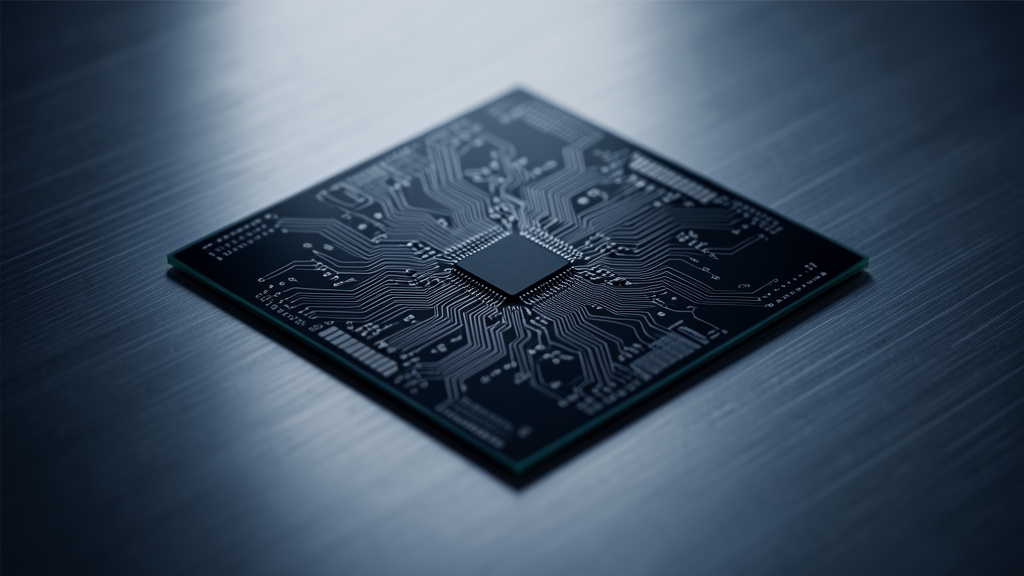
On Wednesday, the artificial intelligence leader shocked the industry by announcing its first custom-designed AI chip. While the announcement is framed as a way to optimize the performance of ChatGPT, the implications stretch far beyond mere latency improvements. This is a definitive declaration of intent: OpenAI is no longer content being a tenant in other companies' data centers; it is preparing to own the very ground the intelligence stands on.
For years, the AI industry has been defined by a massive, asymmetric dependency. On one side, you have the model builders—the architects of intelligence like OpenAI, Anthropic, and Google. On the other, you have the silicon giants, most notably NVIDIA, who provide the computational muscle required to bring these models to life. By designing its own silicon, OpenAI is attempting to break this dependency, signaling a shift toward vertical integration that mirrors the most successful hardware-software ecosystems in history.
Breaking the Compute Tax
At the heart of this move is the concept of "compute efficiency." Currently, training and running massive Large Language Models (LLMs) requires a staggering amount of energy and capital. Most of this cost is directed toward general-purpose GPUs (Graphics Processing Units). While NVIDIA’s chips are the gold standard, they are designed to be "jacks-of-all-trades," capable of everything from gaming to scientific simulation to AI training.
A custom chip, or Application-Specific Integrated Circuit (ASIC), allows OpenAI to strip away the unnecessary features of a general-purpose GPU and double down on the specific mathematical operations that drive transformer architectures. This includes optimizing for high-bandwidth memory (HBM) access and reducing the energy overhead of data movement—the silent killer of large-scale AI deployments.
By tailoring the silicon to the specific needs of its models, OpenAI isn't just looking for a speed boost; it is looking to slash the "compute tax." If they can run ChatGPT more cheaply per query, their margins expand, their scalability explodes, and their ability to deploy increasingly complex models becomes less constrained by the global supply of third-party chips.
The Vertical Integration Playbook
To understand OpenAI's move, one must look at the blueprint laid out by companies like Apple. Apple does not just build software; they build the silicon that runs the software, the operating system that manages it, and the devices that house it. This tight coupling allows for a level of optimization and ecosystem lock-in that software-only companies can never achieve.
OpenAI is following a similar trajectory. By controlling the hardware, they gain a level of predictability in their roadmap that is currently impossible. They can design a chip specifically for the next generation of reasoning models before those models are even fully trained. This creates a feedback loop: better models inform better chip design, which in turn enables even more powerful models.
However, this move also places OpenAI in direct competition with its own partners and suppliers. While the company maintains a deep strategic alliance with Microsoft, the introduction of custom silicon adds a layer of complexity to the relationship. Will these chips run exclusively on Azure, or is OpenAI building a platform that could eventually host itself? The industry is watching closely to see how the Microsoft-OpenAI symbiosis evolves in a hardware-centric world.
Challenges in the Silicon Arena
The path from an architectural blueprint to a functioning chip is notoriously treacherous. The semiconductor industry is characterized by massive capital expenditures, razor-thin margins for error, and a brutal talent war. Designing a chip is one thing; manufacturing it at scale requires access to highly advanced fabrication processes—typically through foundries like TSMC—that are currently stretched to their limits by global demand.
Furthermore, OpenAI faces a massive software hurdle. The current AI ecosystem is built on NVIDIA’s CUDA platform, a proprietary software layer that has made it incredibly easy for developers to write code for GPUs. Moving to custom silicon means OpenAI must ensure that its hardware is not just fast, but also programmable and accessible for the developers and researchers who rely on its ecosystem. If the software stack isn't seamless, the hardware—no matter how powerful—will struggle to find footing.
A New Competitive Landscape
The announcement sends a clear message to the rest of the field. Google has long been playing this game with its TPU (Tensor Processing Unit) architecture, and Amazon and Meta are aggressively developing their own internal silicon. OpenAI’s entry into this race validates the belief that in the age of AI, the most valuable company isn't necessarily the one with the best algorithms, but the one that can most efficiently execute them.
As the industry moves from the era of "AI discovery" into the era of "AI deployment," the battle lines are being drawn in silicon. The winners will not just be those who can teach machines to think, but those who can build the engines that make that thinking economically viable. OpenAI has just placed its biggest bet yet on the idea that the future of intelligence is built, not just written.