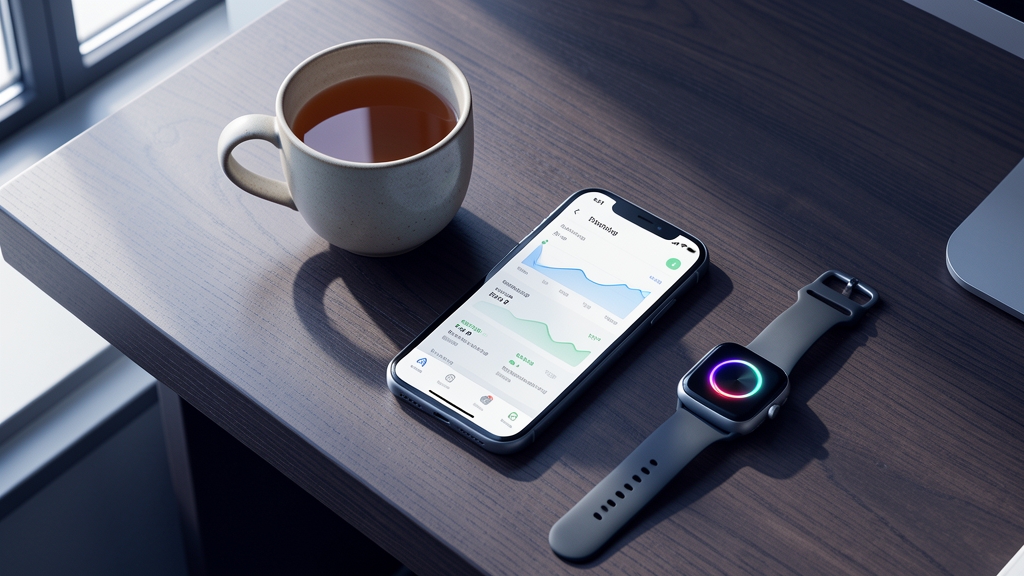
The boundary between general-purpose artificial intelligence and specialized personal assistance has officially dissolved. In a move that signals a massive pivot toward high-stakes utility, OpenAI is rolling out ChatGPT Health to all users across the United States. This is not merely a new interface or a specialized skin for the existing model; it is a fundamental expansion of how large language models (LLMs) interact with the most intimate data humans generate: their biological telemetry.
For months, rumors have swirled regarding OpenAI’s intent to move beyond text generation and into the realm of personal wellness. Today’s rollout confirms that the company is betting on the concept of "Personal Health Intelligence." By enabling users to connect their most vital health ecosystems—including Apple Health, Function, and MyFitnessPal—OpenAI is attempting to bridge the gap between static data and actionable, conversational insight.
The Connected Ecosystem: From Logs to Logic
The true power of ChatGPT Health lies not in its ability to recite medical facts, but in its ability to synthesize disparate data streams. Previously, a user might track their sleep in one app, their caloric intake in another, and their heart rate variability in a third. These data points existed in silos, offering a fragmented view of human health.
With the new integration, ChatGPT Health acts as a connective tissue. When a user grants permission, the model can ingest long-term trends from Apple Health, caloric and macronutrient breakdowns from MyFitnessPal, and metabolic insights from Function. This allows for a level of contextual reasoning that was previously impossible for a consumer-grade tool.
Instead of asking, "How many calories are in an apple?" a user can now ask, "Looking at my sleep data from last night and my activity levels from this morning, why do I feel a mid-afternoon energy crash every Tuesday?" The model doesn't just search a database; it analyzes the correlation between the user's disrupted REM sleep and their specific nutritional intake.
The Technical Frontier: Contextualizing Telemetry
From a technical standpoint, this rollout represents a significant challenge in data processing and context window management. Health data is high-frequency and high-volume. To make this work, OpenAI appears to be utilizing a sophisticated retrieval-augmented generation (RAG) architecture tailored specifically for time-series biometric data.
The model must interpret structured data (like a heart rate of 72 bpm) alongside unstructured data (like a user’s handwritten journal entry about feeling stressed). The ability to cross-reference these two types of information is where the "intelligence" in health intelligence truly resides. However, this capability also brings the inherent risks of LLMs to the forefront: the danger of hallucination in a domain where accuracy is not just a preference, but a biological necessity.
The Privacy Paradox: A High-Stakes Gamble
Any discussion regarding AI and health is incomplete without addressing the massive privacy implications. By integrating with Apple Health and MyFitnessPal, OpenAI is essentially asking users to centralize their most sensitive information within a single conversational interface.
While OpenAI has emphasized that these integrations are built on secure, permission-based API protocols, the industry remains skeptical. The question remains: how is this data being used to refine future models? While the company maintains that personal health data is siloed and not used for general model training, the sheer scale of the data collection makes it a high-value target for both bad actors and regulatory scrutiny.
If a breach were to occur, or if the "anonymization" of data proves insufficient against sophisticated re-identification attacks, the fallout would be catastrophic. OpenAI is walking a razor's edge, attempting to provide unprecedented utility while maintaining the trust required to handle human biology.
Market Disruption: Challenging the Giants
OpenAI’s move is a direct shot across the bow of the existing tech giants. Apple, which owns the hardware and the health data layer via the Apple Watch, and Google, which dominates the wellness space through Fitbit, now face a formidable competitor.
Apple’s approach has historically been centered on privacy and "on-device" processing, keeping data within the walled garden of the iPhone. OpenAI, conversely, is offering a more proactive, conversational agent that can act as a coach rather than just a dashboard. This shifts the competitive battlefield from "who has the best sensors" to "who has the best reasoning engine."
If ChatGPT Health can successfully navigate the medical-grade accuracy required to stay useful without crossing the legal line into practicing medicine without a license, it could redefine the consumer wearable market. We may see a shift where the hardware (the watch or the ring) becomes a secondary commodity, while the intelligence layer (the AI) becomes the primary driver of health behavior.
The Road Ahead: Coaching vs. Diagnosis
As the rollout continues across the U.S., the industry will be watching to see where OpenAI draws the line. There is a critical distinction between a health coach and a medical professional. A coach can suggest that a user increase their magnesium intake based on sleep patterns; a doctor diagnoses a clinical deficiency.
The success of ChatGPT Health will ultimately depend on its ability to remain within the realm of "health literacy"—helping users understand their own bodies—without veering into the dangerous territory of clinical diagnosis. For now, the era of the AI health companion has arrived, and the implications for human longevity and wellness are profound.