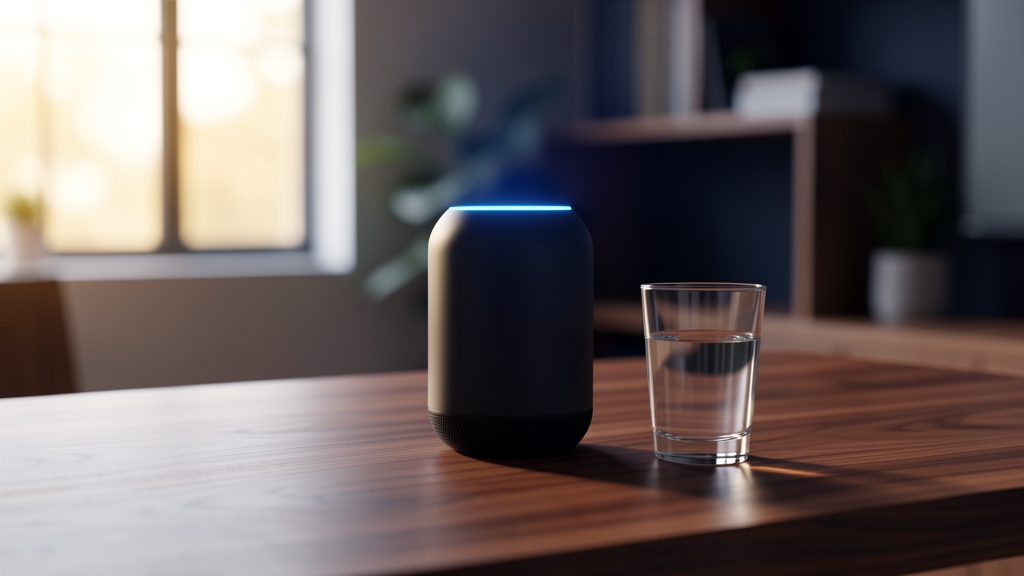
The era of the "walkie-talkie" AI interaction—where a user speaks, waits for a processing delay, and then receives a robotic response—is nearing its expiration date. Recent industry intelligence suggests that OpenAI is preparing to launch GPT Bidi 1, a model specifically engineered to facilitate fluid, bidirectional voice communication. If the rumors hold true, this rollout represents a fundamental shift in how humans interface with large language models (LLMs), moving away from structured prompts and toward natural, continuous dialogue.
The Bidirectional Breakthrough
At the heart of the rumored GPT Bidi 1 is the concept of "bidirectionality." In current state-of-the-art voice modes, the interaction follows a linear, turn-based protocol. The system listens, converts speech to text, processes the intent, generates a text response, and finally converts that text back into audio. This sequence creates inherent latency and prevents the most basic element of human conversation: the ability to interrupt and overlap.
GPT Bidi 1 aims to shatter this cycle. By utilizing a more integrated, streaming-first architecture, the model is expected to process audio input and generate audio output simultaneously. This allows for a "full-duplex" communication style. In practice, this means a user can interrupt the AI mid-sentence to correct a fact or ask for clarification, and the AI can respond to that interruption in real-time, much like a human interlocutor would.
Technical Nuance: Beyond Just Low Latency
While reducing latency is a primary goal, the technical implications of GPT Bidi 1 go much deeper than mere speed. To achieve a natural conversational flow, the model must master several complex layers of linguistics and acoustic physics:
* Prosody and Emotional Intelligence: Natural conversation is defined by rhythm, pitch, and stress. GPT Bidi 1 is expected to move beyond standard text-to-speech templates, instead generating prosody that matches the context of the discussion. If the user sounds urgent, the model's response cadence should adjust accordingly.
* Non-Verbal Cue Processing: Humans use "backchanneling"—small sounds like "mm-hmm," "right," or "okay"—to signal they are listening without taking over the conversation. A bidirectional model would theoretically be able to interpret these cues, allowing it to remain "engaged" even when the user is doing most of the talking.
* Intent Prediction in Mid-Stream: Perhaps the most significant technical hurdle is the ability to predict whether a user is finishing a thought or merely pausing for breath. This requires a level of predictive modeling that operates on the audio stream itself, rather than waiting for a completed sentence.
The Competitive Landscape: The Race for the "Ambient Assistant"
OpenAI’s move toward Bidi 1 is not happening in a vacuum. The race for the most capable voice-first AI is currently the most intense battleground in Silicon Valley. Google is aggressively integrating Gemini into its ecosystem, focusing on deep integration with Android and Workspace. Apple, meanwhile, is positioning "Apple Intelligence" as a deeply personal, context-aware assistant that lives within the OS.
By focusing on the quality and fluidity of the interaction, OpenAI is attempting to leapfrog its competitors. If ChatGPT can feel less like a software application and more like a digital presence, it secures a level of user stickiness that text-based models simply cannot match. This is the foundation of the "Agentic Era"—where AI doesn't just answer questions, but participates in life.
Privacy and the "Always-On" Dilemma
Of course, with greater fluidity comes greater scrutiny. A bidirectional model, by its very nature, requires a more continuous stream of audio data to be processed. This raises significant privacy questions regarding how much of a user's ambient environment is being analyzed to facilitate these "natural" interactions.
Industry analysts suggest that OpenAI will likely implement robust, on-device processing or "edge" computing elements to mitigate these concerns. The goal will be to provide the sensation of a continuous conversation without the security nightmare of streaming everything to a centralized cloud. How OpenAI balances the high computational demands of real-time audio processing with consumer demands for privacy will be the ultimate test of GPT Bidi 1's viability.
The Verdict
If GPT Bidi 1 delivers on its promise, we are witnessing the birth of a new interface. The keyboard and the touchscreen have dominated the last two decades of computing. As AI moves from a tool we "use" to a partner we "talk to," the voice becomes the primary gateway to the digital world. We are moving toward a future where the friction between thought and execution is virtually zero, mediated by a voice that understands not just what we say, but how we say it.