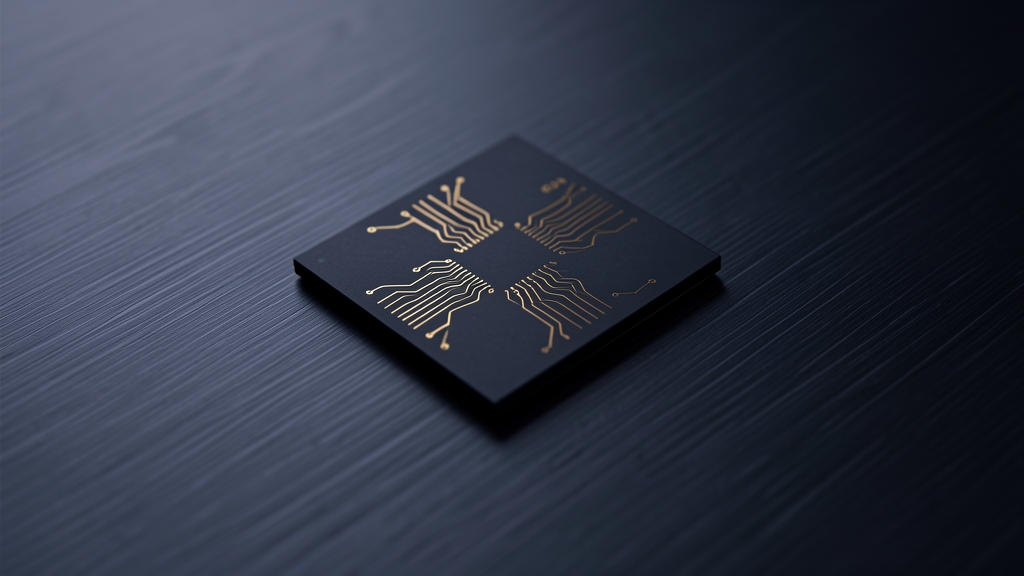
The era of "software-only" AI dominance is reaching its logical, silicon-bound conclusion. For years, the industry has operated on a fundamental dichotomy: companies like OpenAI and Google design the models, while Nvidia provides the massive, general-purpose computational engines required to run them. Today, that boundary is dissolving.
With the introduction of the Jalapeño chip, OpenAI is making its most audacious move yet. This is not merely a hardware update; it is a declaration of intent to control the entire stack, from the mathematical weights of a neural network down to the physical movement of electrons on a substrate. While the move promises to slash the "Nvidia tax" and optimize performance for transformer architectures, the path from a custom design to a scalable infrastructure is fraught with immense capital risks and manufacturing complexities.
Here are the five critical dimensions of OpenAI’s shift into custom silicon.
1. The Shift from General-Purpose to Task-Specific Silicon
The fundamental tension in modern computing lies between flexibility and efficiency. Nvidia’s GPUs are the "Swiss Army knives" of the data center—versatile enough to handle everything from high-end gaming to complex physics simulations and, of course, AI. However, this versatility comes at the cost of overhead.
The Jalapeño chip is an Application-Specific Integrated Circuit (ASIC) designed with a singular, obsessive focus: the transformer architecture. By stripping away the hardware components required for non-AI tasks, OpenAI is engineering a chip that prioritizes the specific mathematical operations—largely massive matrix multiplications—that drive large language models (LLMs). This specialization allows for higher throughput and significantly better performance-per-watt, a metric that becomes the ultimate arbiter of profitability as models scale toward trillions of parameters.
2. Breaking the Nvidia Dependency
For the better part of the current AI boom, the world has been at the mercy of a single supply chain. The scarcity of H100 and B200 clusters has dictated the pace of innovation for every major lab. OpenAI’s move into custom silicon is a strategic hedge against this bottleneck.
By designing its own hardware, OpenAI gains a degree of sovereignty over its roadmap. They no longer have to wait for a chipmaker’s release cycle to align with their algorithmic breakthroughs. If a new method of attention mechanism requires a specific way of handling memory, OpenAI can, in theory, bake that requirement directly into the Jalapeño architecture. This vertical integration is the same playbook used by Apple, which transitioned from Intel to its own M-series silicon to achieve unprecedented control over the user experience and margins.
3. The Memory Bottleneck and Interconnect Strategy
In the world of high-scale AI, the limit to performance is rarely just the speed of the processor; it is the speed at which data can move from memory to the compute cores. This "memory wall" is what kills performance in large-scale training runs.
Preliminary technical insights into the Jalapeño architecture suggest a massive emphasis on High Bandwidth Memory (HBM) integration and advanced chiplet interconnects. To train models of the next generation, thousands of these chips must behave as a single, cohesive unit. OpenAI is likely focusing heavily on proprietary interconnect protocols to reduce latency between chips, attempting to create a "super-chip" fabric that can rival Nvidia’s NVLink. If they succeed, the ability to scale across massive clusters without losing efficiency to communication overhead will be their greatest competitive advantage.
4. The Manufacturing Gauntlet
Designing a chip is one thing; manufacturing it at scale is an entirely different beast. OpenAI is not a foundry. They remain fundamentally dependent on the global semiconductor ecosystem, specifically the advanced packaging capabilities of TSMC.
The complexity of producing high-end AI silicon involves navigating the intricacies of CoWoS (Chip-on-Wafer-on-Substrate) packaging and securing allocations in a highly contested foundry environment. Even with a superior design, OpenAI faces the risk that they cannot produce enough Jalapeño units to make the investment worthwhile. The "scale problem" is the shadow hanging over this entire project: custom silicon only delivers its promised cost savings once you are running it at a scale that justifies the astronomical Research and Development (R&D) and fabrication costs.
5. Redefining the Economics of Inference
While much of the industry focuses on the training of models, the real economic battleground is inference—the act of actually running a prompt through a model to get an answer. As AI becomes embedded in every digital interaction, the cost per token becomes the most important metric in the industry.
Nvidia’s chips are optimized for the massive, high-intensity bursts of training. However, for the trillions of daily queries that define the future of AI, a more efficient, inference-optimized chip is required. Jalapeño is being positioned as a tool to drive down the marginal cost of intelligence. If OpenAI can make inference significantly cheaper than their competitors using general-purpose hardware, they can offer services at price points that are mathematically impossible for others to match, effectively weaponizing their hardware to win the software market.
The Jalapeño chip represents a pivot from the "AI Summer" of rapid experimentation to an "AI Autumn" of industrialization. The question is no longer just "how smart can we make the models," but "how efficiently can we manufacture the thought?"