The foldable smartphone market has long existed in a state of tension. On one hand, the technology represents the most significant leap in mobile form factors in a decade; on the other, it remains haunted by the physical limitations of materials. For years, consumers and critics alike have pointed to the same two Achilles' heels: the visible, tactile crease that interrupts the display experience, and the inherent fragility of a device that must constantly undergo mechanical stress.
Samsung appears ready to break this stalemate. With an upcoming unveiling scheduled for July twenty-second, the tech giant is pivoting toward a high-end material solution: Flex Titanium. This isn't merely a marketing rebrand; according to early technical briefings, it represents a fundamental shift in how foldable displays manage structural integrity and stress distribution.
The Physics of the Fold
To understand why Flex Titanium matters, one must first understand the engineering nightmare that is a folding screen. Current foldable displays rely on complex layers of Ultra Thin Glass (UTG) and polymer films. When these layers bend, they undergo tension on the outer edge and compression on the inner edge. This uneven distribution of force is what creates the "valley"—the dreaded crease that catches the light and the fingernail.
Furthermore, every fold introduces micro-stresses into the display substrate. Over thousands of cycles, these stresses can lead to material fatigue, resulting in dead pixels or structural failure. The industry has been chasing a "perfect fold" through incremental software optimizations and slightly more resilient plastics, but the solution has always been a battle against physics.
Decoding Flex Titanium
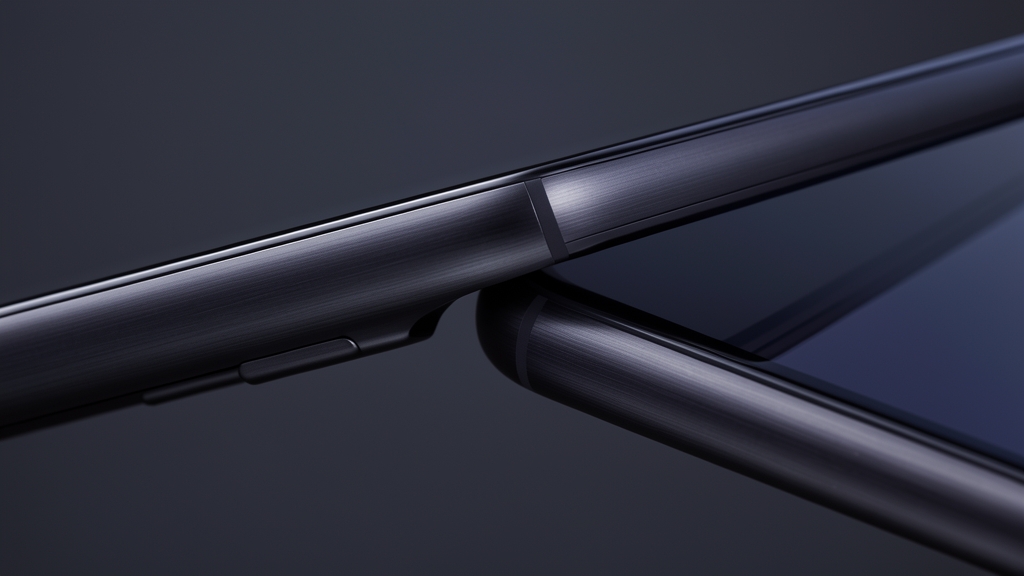
While Samsung is keeping the precise chemical composition of Flex Titanium under wraps until the July twenty-second event, the technical implications are clear. The technology suggests a move toward a hybrid material stack that integrates titanium-alloy micro-structures within the display's protective layers or the hinge mechanism itself.
The primary goal is twofold:
* Uniform Stress Distribution: By incorporating a more rigid yet flexible metallic framework, Samsung aims to distribute the mechanical load across a wider surface area during a fold. This minimizes the localized compression that causes the crease to form.
* Enhanced Tensile Strength: Titanium is renowned for its high strength-to-weight ratio. Integrating it into the foldable architecture allows the device to resist the warping and "spreading" that often occurs in thinner foldable models, ensuring the device remains flush when closed.
If successful, Flex Titanium could transition foldables from "experimental luxury" to "indestructible utility." It addresses the psychological barrier that still prevents many mainstream users from adopting foldable technology: the fear that the device is one drop or one thousand folds away from breaking.
The Competitive Landscape
Samsung’s move comes at a critical juncture. The foldable market is no longer a monopoly. Competitors, particularly from the Chinese manufacturing sector, have been aggressively pushing the boundaries of thickness and hinge design. Brands like Honor and Oppo have demonstrated devices that are remarkably thin, sometimes rivaling traditional slab phones, but often at the cost of perceived durability or significant crease visibility.
By doubling down on "Titanium-grade" durability, Samsung is attempting to differentiate itself through premium engineering rather than just sheer thinness. The strategy is clear: while others race to make the thinnest device, Samsung wants to make the most reliable one. In the high-end smartphone segment, reliability is a currency that often outweighs aesthetics.
Beyond the Crease: A Design Evolution
The introduction of Flex Titanium also signals a broader design shift. Historically, foldable phones have been slightly bulkier to accommodate the complex hinge and reinforced display layers. A more efficient material could allow for a more streamlined chassis without sacrificing the structural integrity required for a long device lifespan.
We may see a future where the distinction between a "standard" smartphone and a "foldable" smartphone becomes almost invisible in terms of tactile feel. If the crease can be neutralized and the device can feel as solid as a titanium-framed slab, the barrier to mass adoption may finally crumble.
The July Twenty-Second Litmus Test
The upcoming unveiling will be more than just a product launch; it will be a test of whether material science can finally catch up to mobile software's ambitions. The industry is watching to see if Flex Titanium is a genuine breakthrough that reshapes the hardware paradigm or a highly polished iterative update.
If Samsung delivers on its promise of a seamless, crease-free, and ultra-durable display, it will effectively reset the standard for the entire mobile industry. The era of the "fragile foldable" could be coming to an end, replaced by a new generation of devices that are as resilient as they are revolutionary.