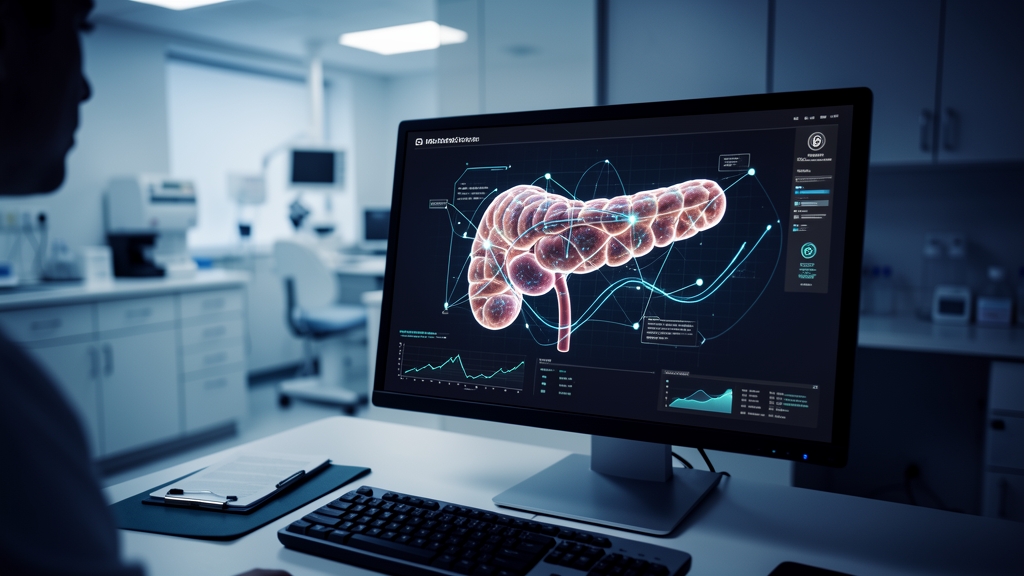
The Silent Killer’s Early Warning: How Mayo Clinic’s New AI is Outsmarting Pancreatic Cancer
For decades, pancreatic cancer has remained one of the most formidable adversaries in modern oncology. Often referred to as a "silent killer," the disease is notorious for its lack of early symptoms, frequently presenting only when the malignancy has reached an advanced, often untreatable stage. However, a paradigm shift is underway. Researchers at Mayo Clinic are leveraging deep learning to transform the diagnostic window, developing an artificial intelligence system that identifies the precursors of the disease years before a traditional diagnosis is possible.
This is not merely an incremental improvement in medical imaging; it is a fundamental restructuring of how we approach predictive health.
Decoding the Subtleties: The Mechanics of the Breakthrough
The difficulty in detecting pancreatic cancer lies in its subtlety. Unlike many other cancers that produce distinct masses or localized pain early on, pancreatic changes are often masked by a chaotic web of seemingly unrelated physiological fluctuations. Human clinicians, even the most seasoned oncologists, are biologically limited in their ability to correlate minute, longitudinal changes across disparate data points.
The Mayo Clinic AI overcomes this limitation through multimodal data fusion. Rather than looking at a single snapshot—such as a single CT scan or a specific blood test—the algorithm analyzes vast datasets of electronic health records (EHRs), longitudinal imaging, and biochemical markers.
The system utilizes neural networks trained to recognize non-linear patterns. It looks for "micro-trends": a slight, statistically significant deviation in glucose metabolism, a subtle shift in specific liver enzymes, and minor changes in weight or digestive patterns that, when viewed in isolation, appear clinically insignificant. When the AI aggregates these signals over a multi-year timeline, it recognizes a signature of impending malignancy that is invisible to the naked eye.
From Reactive Medicine to Proactive Intervention
The implications of this technology are profound. Current oncology is largely a reactive discipline—we wait for the tumor to manifest, and then we fight to contain it. By the time a patient feels the first pang of pain or notices jaundice, the window for curative surgery has often already closed.
By shifting the diagnostic timeline forward by years, this AI enables a "pre-symptomatic" intervention strategy. This could involve:
* Enhanced Surveillance: Patients flagged by the AI can be moved into high-frequency screening protocols, catching tumors while they are still localized and surgically resectable.
* Precision Prevention: Identifying high-risk individuals allows for personalized lifestyle or pharmacological interventions designed to delay or prevent oncogenesis.
* Clinical Trial Optimization: Researchers can identify prospective patients for preventative clinical trials long before they become traditional candidates, accelerating the development of new therapies.
The Data Challenge and the "Signal in the Noise"
The development of such a system is as much a feat of data engineering as it is of biological science. Training an AI to detect a rare and subtle event requires massive, high-fidelity longitudinal datasets. The Mayo Clinic team has had to solve the "noise" problem—distinguishing between the natural fluctuations of human health and the genuine, creeping signals of pancreatic cancer.
This requires sophisticated temporal pattern recognition. The AI must understand what "normal" looks like for a specific individual across different ages and health states, allowing it to detect deviations from that person's unique baseline. This move toward personalized, longitudinal modeling is the next frontier of digital health.
The Hurdles: Ethics, Accuracy, and Integration
Despite the excitement, the path to widespread clinical deployment is fraught with complexities. The foremost concern is the "false positive" paradox. In a predictive model, an incorrect alarm can lead to unnecessary, invasive biopsies and immense psychological distress for patients. Balancing sensitivity (detecting every case) with specificity (not flagging healthy people) is a delicate mathematical dance that the developers must perfect.
Furthermore, there is the challenge of integration. For this AI to be effective, it cannot exist as a siloed tool. It must be seamlessly woven into the existing workflows of hospitals and primary care clinics. Physicians must be able to trust the output, moving from "The AI says you might have cancer" to "The data indicates a 78% probability of pancreatic oncogenesis within 24 months, suggesting immediate follow-up."
Finally, data privacy remains paramount. Training these models requires access to some of the most sensitive information a human possesses. Ensuring that this data is used ethically and remains secure is a prerequisite for public trust.
A New Era of Predictive Health
The Mayo Clinic breakthrough serves as a bellwether for the future of medicine. We are moving away from an era of "symptom-driven" care and toward an era of "data-driven" foresight. As AI continues to refine its ability to parse the complexities of human biology, the goal is no longer just to treat disease, but to anticipate it.
If this technology can be successfully scaled, the definition of "early detection" will change forever. The battle against pancreatic cancer is no longer just about better drugs or sharper scalpels; it is about the intelligence required to see the invisible before it becomes a crisis.