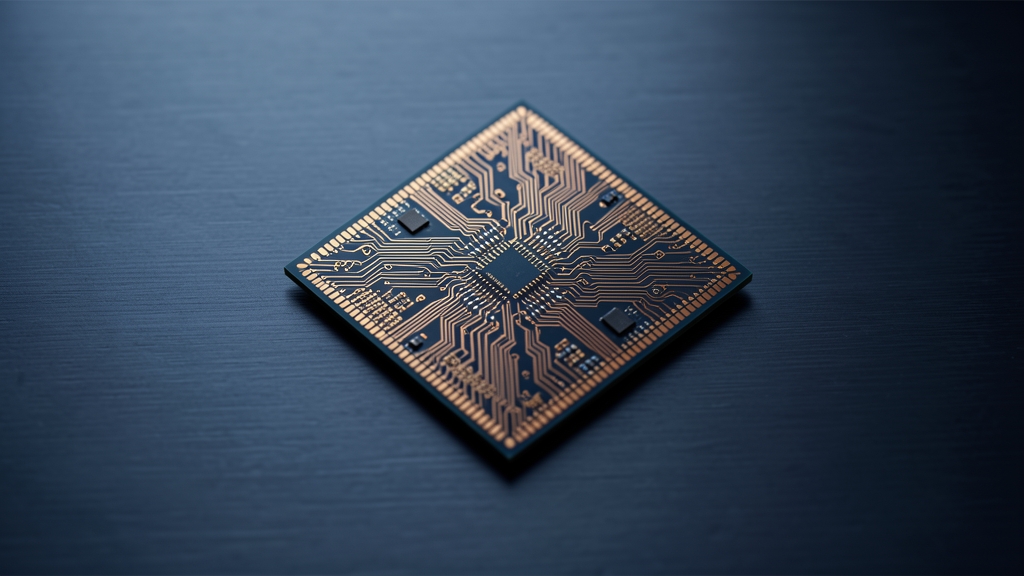
The 2nm Frontier: Inside the Leaks Surrounding Qualcomm’s Snapdragon 8 Elite Gen 6 Series
The mobile silicon wars are entering a volatile new phase. For years, the industry has been chasing the shrinking boundaries of Moore’s Law, fighting for every fraction of a nanometer to squeeze more efficiency and power out of handheld devices. Now, a series of high-level leaks suggests that Qualcomm is ready to stop chasing the curve and start defining it.
According to recent industry intelligence, the upcoming Snapdragon 8 Elite Gen 6 series represents more than just a routine iterative update. The leaks point toward a massive technological pivot: the transition to a 2nm manufacturing process, the expansion of Qualcomm’s custom Oryon CPU architecture, and a strategic shift toward a bifurcated chip lineup featuring both "Standard" and "Pro" variants.
The 2nm Leap: Scaling the Wall
At the heart of this potential disruption is the move to a 2nm process node. For the mobile industry, this is a monumental threshold. As semiconductor manufacturers approach the physical limits of silicon, the transition from 3nm to 2nm is not merely about size; it is about the fundamental way transistors are constructed.
Moving to a 2nm node typically involves a shift to Gate-All-Around (GAA) transistor architecture. Unlike the FinFET structures that have dominated the industry for years, GAA provides better control over the channel, significantly reducing current leakage and allowing for higher performance at lower voltages. For the end user, this translates to a dual benefit: devices that can handle heavier workloads—such as real-time generative AI and high-fidelity gaming—without the thermal throttling that has plagued high-performance smartphones.
If Qualcomm successfully implements a 2nm process, they aren't just competing on clock speeds; they are competing on thermal efficiency. In the thin, fanless chassis of a modern smartphone, heat is the ultimate enemy. A more efficient process node allows for sustained peak performance, a metric that has become the true battleground for flagship supremacy.
Oryon Architecture: The End of Commodity Silicon
Perhaps even more significant than the process node is the reported evolution of Qualcomm's Oryon cores. Historically, mobile chipsets relied heavily on standard ARM designs. However, Qualcomm has been aggressively pursuing a custom-silicon strategy, moving away from off-the-shelf architectures to design their own high-performance cores.
The Snapdragon 8 Elite Gen 6 leaks suggest that the Oryon implementation is reaching maturity. By designing their own CPU microarchitecture, Qualcomm can optimize specific instruction sets for mobile-centric tasks, such as neural processing and media encoding, in ways that standard ARM designs cannot. This custom approach allows for a more aggressive "big-core" configuration, potentially narrowing the performance gap between mobile processors and desktop-class silicon.
We are witnessing a shift where the SoC (System on a Chip) is becoming a bespoke piece of engineering rather than a collection of standardized components. This level of vertical integration is a move traditionally reserved for companies like Apple, and Qualcomm’s pursuit of Oryon suggests they are no longer content to play second fiddle in the performance hierarchy.
A New Market Strategy: The Rise of the "Pro" Variant
The most surprising aspect of these leaks is the reported existence of two distinct tiers: a standard Snapdragon 8 Elite Gen 6 and a premium "Pro" version.
For years, the flagship market has been relatively monolithic. A manufacturer would buy the top-tier Qualcomm chip, and that chip would power everything from their $700 "base" flagship to their $1,300 "Ultra" model. The leak suggesting a "Pro" variant indicates a move toward a more nuanced, tiered ecosystem.
The implications for Original Equipment Manufacturers (OEMs) like Samsung, Xiaomi, and OnePlus are profound:
* The Standard Variant: Likely optimized for high-end mainstream flagships. It will provide excellent efficiency and strong AI capabilities, serving the bulk of the premium market.
* The Pro Variant: Expected to feature higher clock speeds, more Oryon "big" cores, and perhaps a larger cache or enhanced NPU (Neural Processing Unit) throughput. This chip would be reserved for "ultra-premium" devices—the kind of phones designed to compete directly with the most expensive silicon on the market.
This stratification allows OEMs to more effectively segment their product lines, offering a clear hardware distinction between their standard flagship and their "everything-but-the-kitchen-sink" enthusiast models.
The AI Factor: Silicon Optimized for Intelligence
We cannot discuss the next generation of mobile chips without addressing the elephant in the room: on-device Artificial Intelligence. The Snapdragon 8 Elite Gen 6 isn't just being built for speed; it's being built for inference.
As generative AI moves from the cloud to the edge, the demand for NPU performance is skyrocketing. The leaks suggest that the Gen 6 series will feature a massively upgraded NPU designed to handle Large Language Models (LLMs) and complex image generation locally on the device. This is critical for privacy, latency, and even the long-term cost of operating these services.
The combination of a 2nm process and custom Oryon cores provides the necessary "computational headroom" to make on-device AI feel instantaneous rather than a processed, delayed experience.
The Competitive Landscape
The stakes could not be higher. Qualcomm is facing a pincer movement: on one side, Apple continues to refine its highly integrated A-series silicon; on the other, MediaTek is aggressively capturing market share with its Dimensity line through high performance-per-dollar ratios.
By moving to 2nm and introducing a "Pro" tier, Qualcomm is signaling that it is no longer playing defense. They are making a play for the absolute top of the pyramid—the enthusiasts and power users who demand the absolute limit of what mobile technology can achieve.
Whether these leaks materialize into a reality will depend on the complexities of 2nm yields and the economic realities of the semiconductor supply chain. However, if the rumors are true, the next era of Android flagships will not be an evolution; it will be a revolution.