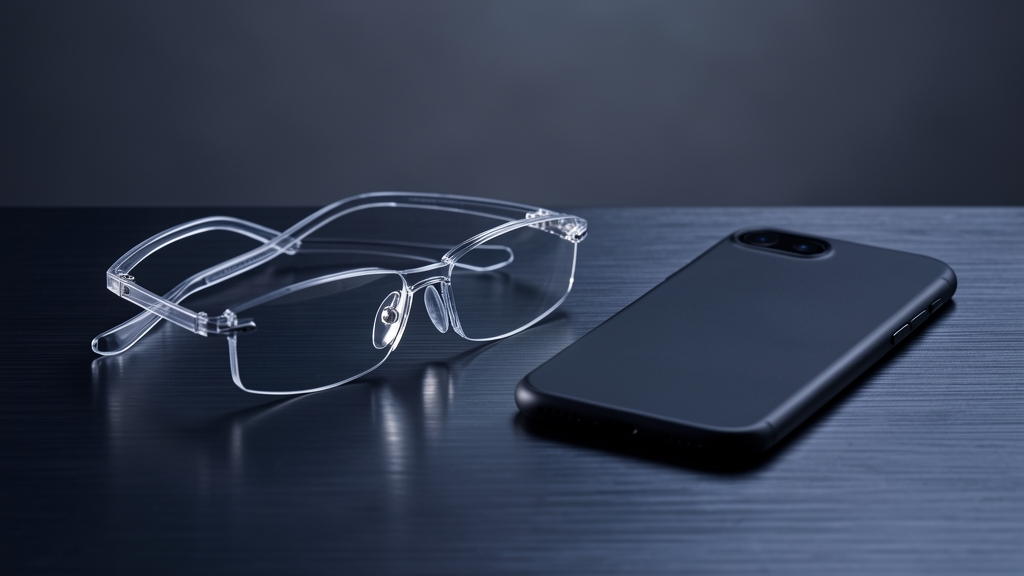
For nearly two decades, the smartphone has functioned as the undisputed sun of the consumer technology solar system. Every app, every social interaction, and every digital transaction orbits around that glowing rectangle in our pockets. However, a quiet consensus is forming among the architects of the modern digital age: the smartphone’s reign is reaching its twilight.
In recent high-level discussions and industry summits, executives from the world’s most influential hardware and software firms are signaling a strategic pivot. The narrative is shifting away from "mobile-first" toward an "ambient-first" philosophy. The driver of this transition isn't just a new form of hardware, but the explosive maturation of multimodal Artificial Intelligence.
The Death of the Interface
The primary limitation of the smartphone is its interface. To interact with the digital world, a user must perform a series of physical "interruptions": pull the device out, unlock it, navigate a UI, and focus their vision on a small, high-density screen. This creates a barrier between the human and their environment.
The new wave of AI-powered wearables—ranging from sophisticated smart glasses and neural-interface rings to lightweight AI pendants—aims to dissolve this barrier. These devices do not ask for your attention; they augment your perception.
By leveraging Multimodal Large Language Models (MLLMs), these wearables can "see" what the user sees and "hear" what the user hears. When the interface moves from a touch-based screen to a combination of voice, gaze, and gesture, the need for a central handheld hub begins to evaporate. The intelligence is no longer trapped inside a slab of glass; it is distributed into the user's immediate surroundings.
The Hardware Convergence
The industry is currently witnessing a three-pronged assault on the smartphone’s dominance:
* Augmented Reality (AR) Eyewear: These devices aim to overlay digital information directly onto the physical world. Instead of checking a map on a screen, navigation arrows appear on the pavement before you.
* Audio-Centric Wearables: High-fidelity smart earbuds and pendants act as a constant, invisible concierge. Through low-latency voice interaction, these devices handle everything from real-time language translation to complex scheduling.
* Biometric and Haptic Sensors: Smart rings and wristbands are evolving beyond simple fitness trackers. They are becoming the primary input methods for "silent" computing, allowing users to control digital environments through micro-gestures.
The technical challenge remains significant. To truly replace a smartphone, these devices must solve the "power-to-weight" paradox: they need enough processing power to run sophisticated AI models locally (to ensure privacy and reduce latency) without becoming too heavy or hot to wear comfortably.
From the "App Economy" to the "Agentic Era"
Perhaps the most profound disruption is not happening in the hardware, but in the software architecture. The smartphone era gave birth to the "App Economy," where users navigate a fragmented landscape of individual applications.
The wearable era promises the "Agentic Era." In this paradigm, users do not open an app to book a flight or order food. Instead, they simply state an intent. An AI agent, possessing the context of the user's preferences, budget, and schedule, orchestrates the various services in the background. The concept of a "user interface" (UI) is being replaced by "intent recognition."
For developers, this represents a seismic shift. The focus is moving from designing beautiful visual layouts to engineering robust, reliable data schemas that an AI agent can interpret and act upon.
The Counter-Argument: The Utility of the Slab
Despite the optimism from tech leaders, the smartphone is not an easy incumbent to dethrone. The "glass slab" remains a remarkably efficient tool for high-density information consumption. Reading a long-form article, editing a video, or playing a high-fidelity game is still vastly superior on a large, tactile screen than through a pair of glasses or a voice command.
There are also significant social and psychological hurdles. "Screen time" is a known social construct; "ambient time" is an unknown. The privacy implications of wearing a device that is constantly "seeing" and "hearing" the world are profound and remain a primary point of contention for regulators and consumer advocacy groups.
The Transition Period
We are unlikely to see a sudden "smartphone extinction event." Instead, we are entering a period of hybrid computing. For the foreseeable future, the smartphone will likely persist as a "compute puck"—a powerful, pocketable processing unit that handles the heavy lifting, long-term storage, and high-speed connectivity for a suite of lighter, more intelligent wearables.
The smartphone is evolving from being the primary interface to becoming the infrastructure for a more distributed, invisible, and intelligent digital existence. The question for the next decade is no longer how we use our phones, but how we live without looking at them.