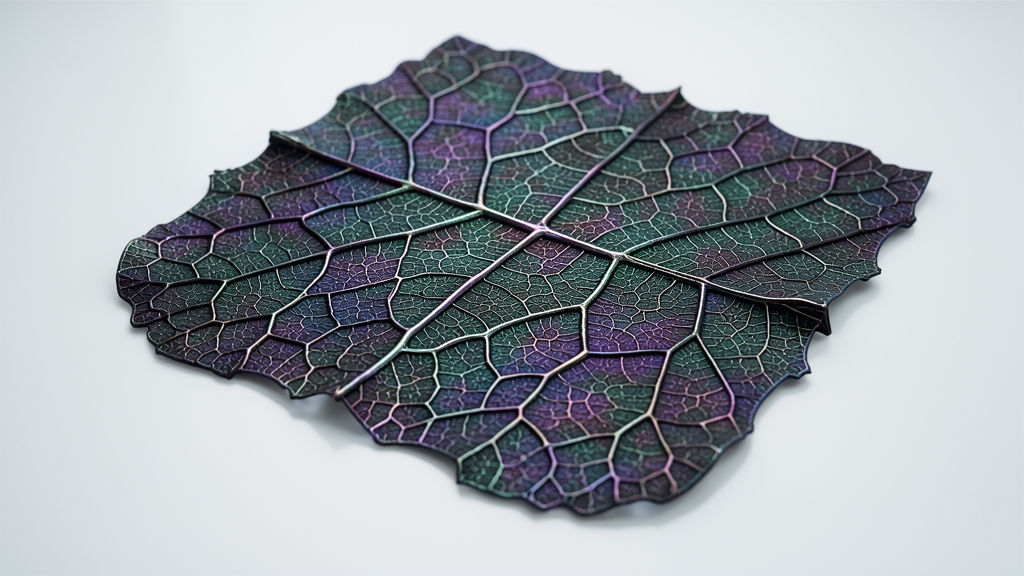
The atmosphere at this year's "Visions of Tomorrow" summit is markedly different from the high-glamour, superficial spectacle traditionally associated with global fashion weeks. There are fewer strobe lights and more data visualizations. The focus has shifted from the silhouette of a garment to the molecular structure of its fibers and the cryptographic integrity of its supply chain.
As industry leaders gather to honor the pioneers driving change, a clear narrative is emerging: the fashion industry is undergoing a radical technological metamorphosis. We are witnessing the convergence of synthetic biology, material science, and decentralized ledger technology, turning what was once a high-waste, extractive sector into a frontier for deep-tech innovation.
The Rise of Bio-Fabrication
Perhaps the most significant disruption discussed at the summit is the move away from both petrochemical-based synthetics (like polyester) and resource-intensive natural fibers. The "new luxury" is being grown, not harvested.
The panel on bio-fabrication highlighted breakthroughs in mycelium-based leather alternatives and lab-grown silk proteins. Unlike traditional leather, which carries a heavy environmental footprint, mycelium—the root structure of fungi—can be cultivated in controlled environments, offering a scalable, carbon-sequestering alternative that mimics the tactile qualities of animal hides.
"We are moving from a model of extraction to a model of cultivation," noted one of the keynote speakers. The technical challenge, however, remains scalability. While lab-grown materials show immense promise in high-end, limited-run collections, the industry is now facing the engineering hurdle of mass-producing these biological polymers without losing structural integrity or colorfastness.
The Digital Product Passport: Ending the Era of Greenwashing
Sustainability in fashion has long been plagued by "greenwashing"—the practice of making misleading environmental claims. The technological antidote appearing at the forefront of this summit is the Digital Product Passport (DPP).
Leveraging blockchain technology, the DPP provides a verifiable, immutable record of a garment’s entire lifecycle. From the precise farm where the organic cotton was harvested to the chemical composition of the dyes used, every touchpoint is recorded on a decentralized ledger.
This is more than just a marketing tool; it is a fundamental shift in data transparency. By scanning a discreetly embedded NFC chip or a QR code, consumers and recyclers alike can access a garment's "digital twin." For the secondary market, this ensures authenticity; for the recycling industry, it provides the exact chemical breakdown needed to facilitate high-grade textile-to-textile recycling, a process that has historically been hampered by material ambiguity.
Smart Textiles and the Internet of Threads
The conversation also veered heavily into the realm of hardware. We are seeing the early stages of "smart textiles"—fabrics that are not just passive coverings but active interfaces.
The distinction between "wearables" and "clothing" is blurring. Instead of bulky smartwatches, engineers are developing conductive yarns that allow sensors to be woven directly into the fabric. These textiles can monitor physiological data, such as heart rate and skin temperature, or even provide haptic feedback.
More impressively, the summit showcased research into adaptive thermal regulation. Using phase-change materials (PCMs) integrated at the fiber level, these garments can absorb, store, and release heat, effectively allowing a single jacket to maintain a constant microclimate for the wearer regardless of external conditions. This has profound implications not only for consumer apparel but for high-performance workwear and medical applications.
AI-Driven Circularity and the End of Overproduction
The industry’s most persistent problem remains its volume: the sheer scale of overproduction that leads to millions of tons of textile waste annually. Here, Artificial Intelligence is being deployed as a logistical scalpel.
Predictive analytics are now being used to harmonize supply with actual demand, reducing the "deadstock" that often ends up in landfills. Beyond the design phase, AI is revolutionizing the back end of the circular economy. Automated sorting facilities, powered by computer vision, are now capable of identifying and separating blended fabrics with a speed and accuracy that manual labor cannot match. This capability is the "holy grail" for circularity, enabling a truly closed-loop system where old garments become the raw material for new ones.
The Market Impact
The implications for investors and stakeholders are clear. The "Visions of Tomorrow" summit makes it evident that the next generation of fashion giants will likely be tech companies at their core. The value is shifting from brand heritage to intellectual property—specifically, patents in biotechnology and proprietary algorithms in supply chain management.
As the industry moves forward, the divide between "fashion" and "tech" will continue to erode. The winners will be those who view a garment not just as a piece of clothing, but as a sophisticated piece of biological and digital engineering.