From Algorithms to Athletics: Inside OpenAI’s Bold Pivot to Lifestyle Branding
The digital world is often intangible, existing in a nebulous realm of servers, weights, and tokens. For most of its existence, OpenAI has lived in this ethereal space, its impact felt through chat interfaces and API calls. However, a new development suggests the company is looking to ground its identity in the physical world.
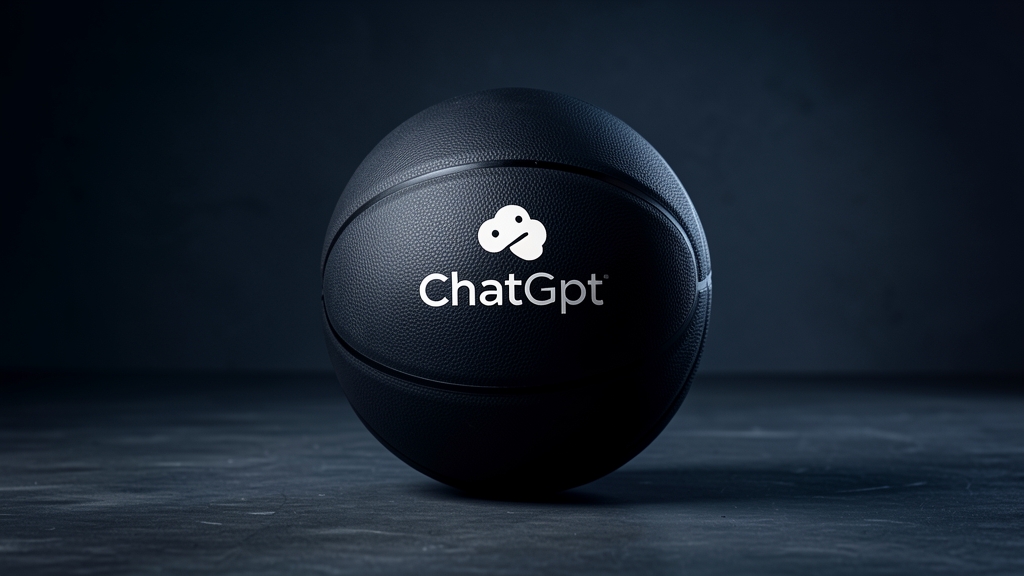
The release of a $70 ChatGPT-branded basketball, accompanied by a broader line of premium merchandise, marks a significant departure from the traditional trajectory of software companies. This is not merely a merchandise drop; it is a calculated experiment in brand evolution. OpenAI is testing whether it can transition from a research-heavy utility to a global lifestyle brand.
The Physics of Brand Loyalty
For the past few years, the primary metric for AI success has been performance: context window size, reasoning capabilities, and latency. But as the AI sector reaches a state of hyper-competition, technical specs are becoming commoditized. When multiple models offer similar intelligence, the differentiator becomes something much harder to quantify: brand affinity.
By releasing physical goods, OpenAI is attempting to capture "mindshare" in a way that a text box cannot. A basketball is a high-visibility, high-tactility object. It belongs in gyms, parks, and living rooms. It moves the ChatGPT logo from a browser tab into the physical environment of the consumer.
* Tactile Connection: Physical products create a sensory relationship with a brand that digital interfaces lack.
* Social Signaling: Wearing or using branded gear signals membership in a specific cultural cohort—in this case, the "early adopter" and "AI-literate" demographic.
* Ubiquity: Merchandise turns users into walking advertisements, extending brand reach far beyond the glow of a smartphone screen.
Beyond the Subscription Model
From a purely financial perspective, the move is an exercise in revenue diversification. The current industry standard for AI monetization relies heavily on recurring monthly subscriptions—the $20-a-month "Plus" model. While stable, subscriptions are subject to churn and the constant pressure of maintaining cutting-edge performance to justify the cost.
Premium merchandise offers a different type of high-margin revenue. It targets the "super-fan"—the segment of the user base that doesn't just use the tool, but identifies with the mission. This is the same playbook used by companies like Apple and Nike, where the product is a gateway to an ecosystem of identity and status.
The Symbolism of the Basketball
The choice of a basketball is particularly telling. Unlike a t-shirt, which can be passive, a basketball is an active object. It requires movement, skill, and engagement. It carries connotations of teamwork, strategy, and high-level execution—traits that align with the sophisticated, high-performance image OpenAI seeks to maintain.
There is also a subtle nod to the "intelligence" aspect of the brand. In many cultures, basketball is a game of high-speed spatial reasoning and strategic foresight. By attaching its name to such an object, OpenAI is making a metaphorical claim: that their AI is as fluid, dynamic, and essential to the "game" of modern life as a ball is to a player.
The Risks: Dilution and Logistics
However, the transition from a research laboratory to a retail powerhouse is fraught with peril. Software companies face unique challenges when entering the physical goods market:
1. Brand Dilution: If the merchandise is perceived as low-quality or "gimmicky," it can damage the prestige of the underlying technology. A $70 price point demands a level of craftsmanship that transcends typical promotional items.
2. Operational Complexity: Managing global supply chains, inventory, and shipping logistics is a world away from managing GPU clusters. A failure in retail execution can lead to consumer frustration and wasted capital.
3. The "Cringe" Factor: There is a fine line between being a cultural icon and being a corporation trying too hard to be "cool." If the merchandise fails to resonate authentically with the community, it could alienate the very users the company seeks to engage.
The Race for Cultural Relevance
As the AI landscape matures, the battle lines are shifting. It is no longer just a race of intelligence; it is a race for cultural relevance. The companies that survive the coming era will not just be those with the most powerful models, but those that become part of the cultural fabric.
OpenAI’s foray into the lifestyle space is a high-stakes bet. They are betting that the future of AI is not just something we use to write emails or generate code, but something we carry with us, something that defines our aesthetic and our place in a rapidly changing world. Whether a $70 basketball is the first step toward becoming a global icon or a momentary distraction remains to be seen, but one thing is certain: the era of invisible AI is coming to an end.