Beyond the Chatbot: How BoGuan is Transforming Xi’an into a Living, Multimodal Historical Experience
In the shadow of the ancient city walls of Xi'an, a quiet revolution is unfolding. It isn't happening in the grand museums or the bustling markets of the Muslim Quarter, but within the silicon and code of a new specialized intelligence. BoGuan, the world’s first commercial multimodal large language model (LLM) specifically engineered for cultural tourism, has officially entered broad application, signaling a new era for the intersection of artificial intelligence and heritage preservation.
While general-purpose LLMs have captivated the public consciousness by writing essays and generating code, they have often struggled with the granular, sensory, and context-heavy demands of cultural immersion. BoGuan is the industry's answer to that limitation, moving past the text-only paradigm to a sophisticated multimodal framework that understands sight, sound, and historical nuance.
The Multimodal Edge: Seeing History Through Data
What distinguishes BoGuan from the ubiquitous chatbots used by travelers today is its multimodal architecture. Most current AI assistants act as glorified search engines; they can tell you the date the Terracotta Army was discovered, but they cannot "see" the specific patina on a ceramic shard or "hear" the cadence of a traditional Qin opera performance to provide real-time commentary.
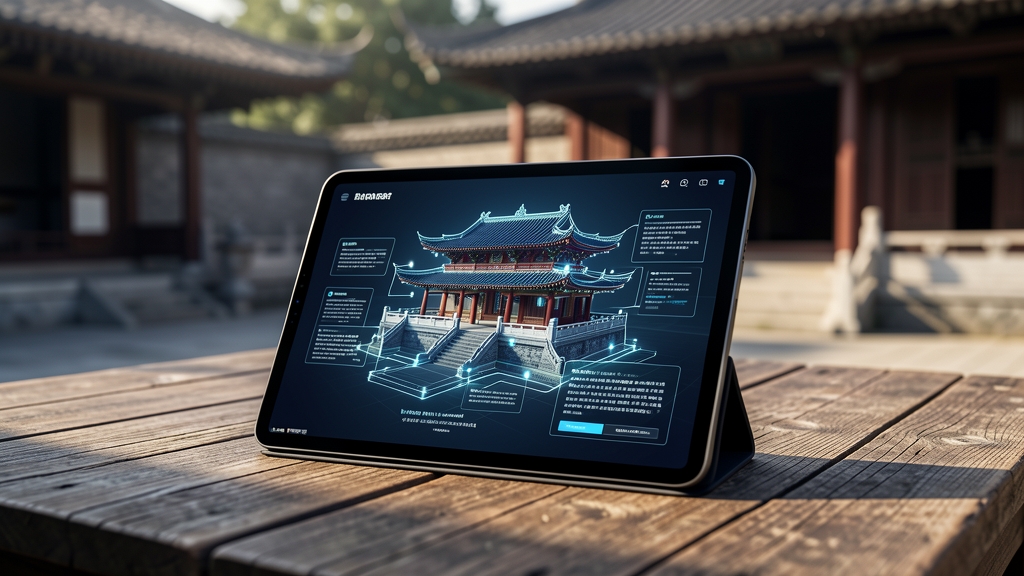
BoGuan utilizes a Vision-Language Model (VLM) integration that allows it to process visual inputs from a user's smartphone camera or augmented reality (AR) glasses. When a visitor points their device at a specific relief carving in the Giant Wild Goose Pagoda, the model doesn't just identify the object; it synthesizes the visual data with a massive, proprietary dataset of historical texts, archaeological records, and regional dialect nuances.
The result is a seamless, low-latency dialogue. A user can ask, "Why is the dragon depicted this way compared to the Ming dynasty style?" and receive an answer that is both historically accurate and visually contextualized. This level of spatial and visual reasoning represents a significant leap in how AI interacts with the physical world.
The Economic Engine: From Context to Commerce
The deployment in Xi'an is not merely a technical showcase; it is a sophisticated commercial experiment. One of the most critical breakthroughs of BoGuan is its ability to generate direct commercial returns through a highly integrated ecosystem.
Unlike general AI, which often operates in a vacuum, BoGuan is built with a "Commerce-Aware" layer. This layer allows the model to function as a highly personalized concierge that bridges the gap between information and transaction. For example, if a visitor expresses interest in the Tang Dynasty tea ceremonies through their interaction with the model, BoGuan can instantly suggest, locate, and facilitate a booking at a local high-end tea house.
The revenue model for this deployment is three-fold:
* B2C Premium Experiences: Travelers can access high-fidelity, "expert-level" guided tours via a subscription or pay-per-use model, offering deeper insights than standard audio guides.
* B2B Integration: Local merchants, hotels, and cultural sites pay to be integrated into the model’s recommendation engine, ensuring that the AI’s suggestions are contextually relevant and commercially viable.
* Data-Driven Insights for Urban Planning: The aggregated, anonymized interaction data provides tourism boards with unprecedented insights into visitor interests, movement patterns, and cultural engagement, allowing for more efficient resource allocation.
Solving the "Generalist" Problem
For years, the tech industry has debated whether the future belongs to "God-models"—massive, all-knowing AIs—or "Vertical AIs"—specialized models trained on narrow, high-quality datasets. BoGuan is a definitive vote for the latter.
General-purpose models suffer from "hallucinations" when faced with highly specific historical or cultural queries, often blending disparate facts into a confident but incorrect narrative. For a cultural tourism site, such errors are catastrophic to brand integrity. BoGuan mitigates this by utilizing Retrieval-Augmented Generation (RAG) grounded in curated, authoritative archaeological and historical databases. By restricting the model’s "creative" freedom within a framework of verified facts, developers have created a tool that is both conversational and academically reliable.
Furthermore, the model handles the linguistic complexities of the region. Xi'an is a melting pot of history and modern dialect. BoGuan’s ability to process and respond in various linguistic registers ensures that it remains accessible to both international tourists and domestic travelers seeking a deeper connection to their own heritage.
The Road Ahead: A Blueprint for the Global Heritage Sector
The success of the BoGuan rollout in Xi'an serves as a blueprint for other global heritage hubs. From the ruins of Rome to the temples of Kyoto, the potential for specialized multimodal LLMs is immense. We are moving away from a world where digital guides are static, pre-recorded voices, and toward a world where history is an interactive, intelligent participant in the travel experience.
As the technology matures, the integration of haptic feedback and more advanced AR will likely make the "digital guide" indistinguishable from a human expert. For the tech industry, the lesson is clear: the next frontier of AI isn't just about being smarter; it's about being more specialized, more sensory, and more deeply integrated into the fabric of our physical and economic lives.