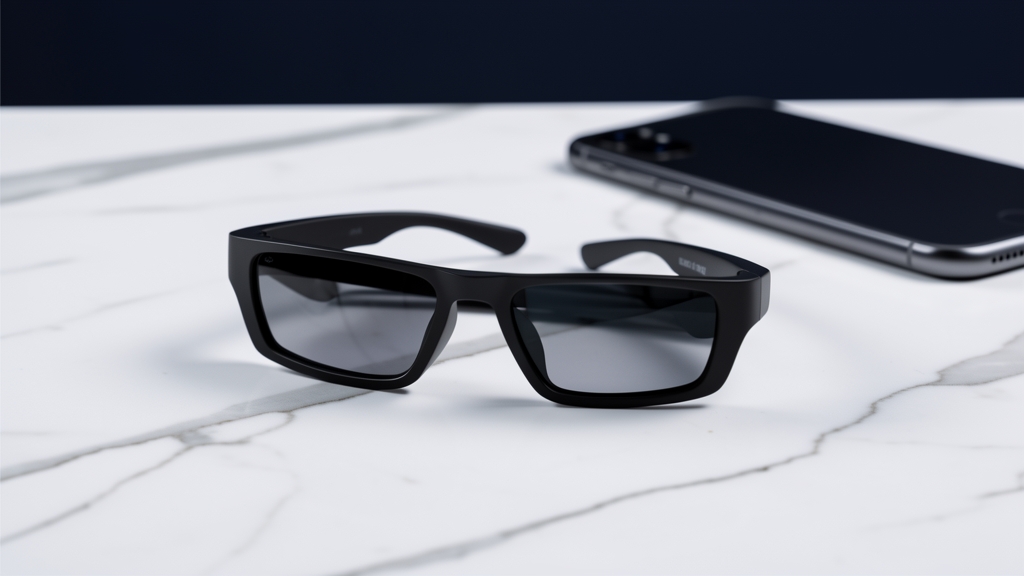
For nearly two decades, the smartphone has served as the undisputed sun around which our digital lives orbit. It is the primary gateway to information, the center of social interaction, and the cockpit for our personal productivity. However, a growing consensus among hardware architects and software engineers suggests that this era of "looking down" is entering its final act.
The shift is not being driven by a sudden lack of interest in mobile devices, but by a fundamental change in how we interact with artificial intelligence. As generative AI moves from being a tool we "visit" via an app to a constant, ambient presence, the handheld glass rectangle is increasingly viewed as a bottleneck to true digital integration.
The Friction of the Handheld Interface
The primary argument for the obsolescence of the smartphone lies in "computational friction." To use a smartphone, a user must physically reach for a device, unlock it, navigate a UI, and focus their gaze on a small, two-dimensional plane. This process is inherently disruptive; it pulls the user out of their immediate physical environment.
In contrast, the next generation of personal computing—anchored by AI-powered smart glasses and lightweight wearables—aims for "ambient intelligence." This paradigm envisions technology that exists in the periphery of our perception, providing information through spatial audio, gaze-tracking, and augmented reality (AR) overlays. Instead of checking a map on a screen, the path is subtly highlighted on the sidewalk before you. Instead of typing a message, an AI assistant processes a whispered command or a simple gesture.
The Technical Catalysts: Silicon and Sight
Two massive technical leaps are making this transition viable: the miniaturization of high-performance silicon and the maturation of waveguide optics.
1. Spatial Intelligence and LLMs: Large Language Models (LLMs) require sensory input to be truly useful. A smartphone is "blind" to the world unless you point its camera at something. Wearables, however, offer a continuous stream of first-person data. By integrating multimodal AI—models that can process text, sight, and sound simultaneously—wearables can provide real-time context. They don't just answer questions; they observe your environment and offer proactive assistance.
2. Optics and Form Factor: The "glass" problem has long been the barrier to smart glasses. Traditional AR headsets are bulky and socially awkward. However, advancements in waveguide technology—which allows light to be directed through thin, transparent lenses—are enabling engineers to pack sophisticated displays into frames that resemble standard eyewear.
3. Edge Computing and Connectivity: The heavy lifting of AI is increasingly being distributed. While local NPU (Neural Processing Unit) efficiency is rising, the low-latency connectivity of 5G and emerging 6G standards allows much of the intensive computation to happen in the cloud or via a "compute puck" in a pocket, reducing the thermal load on the wearable itself.
The Battle for the Face
The market is already witnessing a massive reallocation of R&D capital. The primary battleground has shifted from mobile operating systems to spatial operating systems.
Meta has taken an aggressive stance, moving rapidly from social media platforms to hardware that prioritizes social presence and augmented layers. Meanwhile, Apple has signaled its intent to bridge the gap between high-end spatial computing and consumer-grade wearables, focusing on the seamless integration of digital objects into physical space.
This is more than a hardware race; it is an ecosystem war. The winner will be the company that successfully transitions its user base from a "pocket-centric" ecosystem to a "head-centric" one. This involves not just new hardware, but entirely new design languages for user interfaces that do not rely on touchscreens.
The Hurdles: Privacy, Power, and Social Etiquette
The path to a post-smartphone world is fraught with significant challenges. The most immediate is battery life. Driving high-resolution displays and maintaining constant sensor fusion is an immense power drain, and the physical constraints of eyewear limit the size of the battery that can be included.
Then there is the "social friction" factor. The smartphone, for all its flaws, is socially accepted. Smart glasses that feature active cameras and microphones raise profound privacy concerns for both the wearer and the public. For wearables to achieve mass adoption, they must solve the "creep factor" and become as socially invisible as a pair of Ray-Bans.
A Transition, Not a Collapse
It is unlikely that smartphones will vanish overnight. Instead, we are likely to see a decade-long period of coexistence. The smartphone may evolve into a "hub" or a "compute engine"—a device that sits in a pocket or bag, providing the heavy processing power and battery backup for a suite of lightweight, wearable interfaces.
As we move toward this future, the metric of success for tech companies will shift. We will no longer measure engagement by "screen time," but by how effectively technology integrates into the human experience without demanding our undivided, downward-looking attention.